Visiting Texture Kortrijk, a Museum About the Flax Industry and the River Lys
This article may contain affiliate links. This means we receive a small commission whenever you book or purchase something through our links (at no extra cost to you!). You can find more information in our disclaimer.
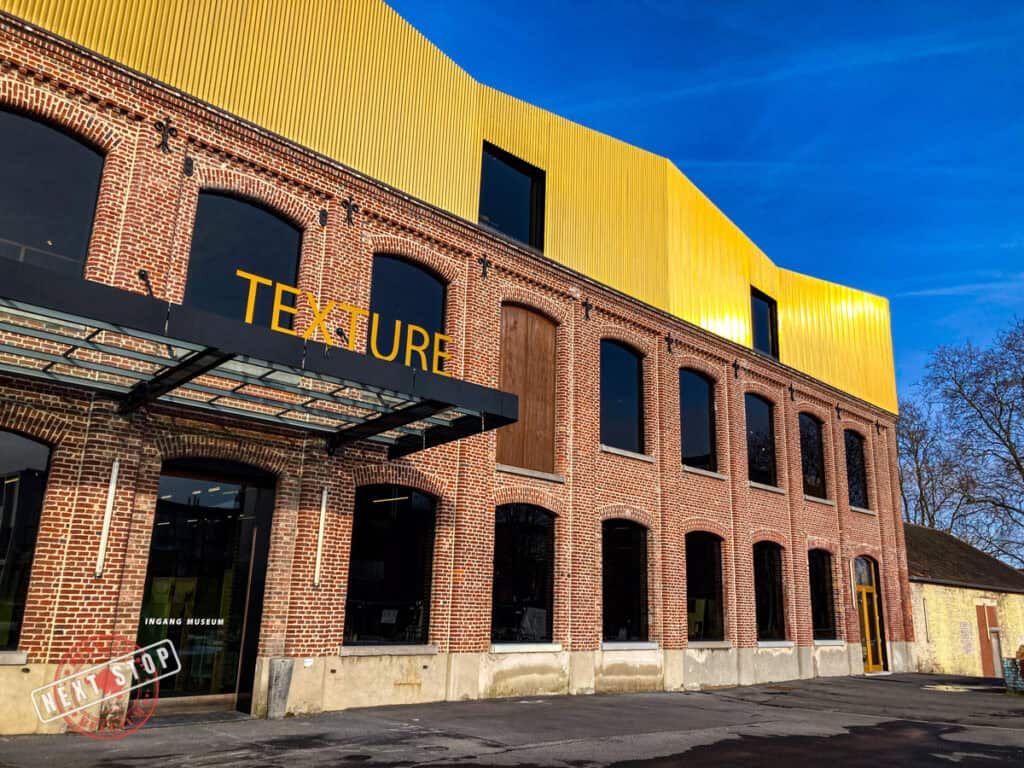
The Texture Museum has awe-striking golden architecture, but little do people know that it holds a more important treasure—the rich history of the flax industry in the Leie region.
I live only 45 minutes away from Kortrijk, so when my daughter was sick one day and I needed to get out of the house with my toddler (who kept annoying her), I decided to make the quick trip to Kortrijk to visit the Texture Museum.
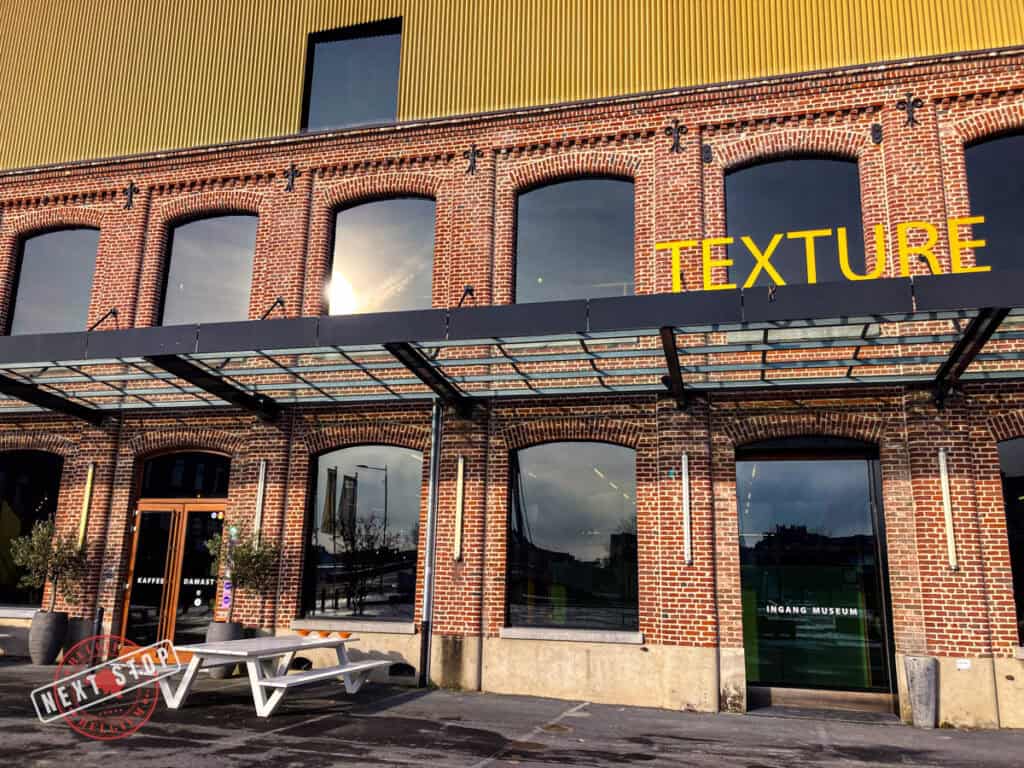
The museum is located a little outside of the main tourist zone, but Kortrijk is compact so you’ll be able to walk there in 15 minutes from the city’s major attractions. The museum building itself is quite an impressive sight, with that golden top floor on top of an industrial building.
The Texture Museum has a unique approach to narrating the history of the flax to its visitors, and is definitely worth a visit – especially if you’re looking for a fun museum to visit with kids.
A Bit of History
In the middle of the 19th Century, the flax industry flourished and became the most profitable industry in the south of West Flanders. Flax was the product that brought wealth to Kortrijk and its surrounding regions until the industry experienced a major crisis in the 1960s.
Best Dewilde, the cultural advisor of the city, foresaw what was about to happen and decided he would not let the rich history of the flax industry be forgotten.
He instantly went to work and started collecting textile work tools.
With the help of volunteers and some companies who supported his cause, Dewilde organized educational and original exhibitions—giving birth to the National Flax Museum in 1982.
Join the community! Make sure you join our Belgium Travel Planning Facebook group. This is the place to ask any questions about your trip, to be inspired, and to connect with other Belgium travelers. Click here to join!
In 2009, under the leadership of Lies Buyse, the museum reprofiled and relocated to a new location—a flax distribution centre built in 1912 by the Linen Thread Company.


The museum underwent many changes; it even stopped operations for two full years.
Then, finally, in 2014, the museum reopened under the new name “Texture, Museum of Flax and River Lys,” which we know today. This new museum is situated along the banks of the River Leie/Lys River, which is an integral part of the flax industry in Kortrijk.
What Will You See?
First of all, let me just say that the Texture Museum building is a sight to see. I mean, it’s an industrial brick wall building with a golden top floor! There’s no way you can miss that.
Throughout the museum, you can find giant windows with views of the North Bridge (Dutch: Noordbrug). I’m a sucker for big windows and lots of light, so as soon as I saw that, I knew this trip was going to be great!

There are three levels in the building, and each level has a name:
- The Wonder Room
- The Lys Room
- The treasury
The whole museum has an open-plan layout. You won’t ever feel cramped in here!
The ground floor is The Wonder Room. This is where the fun begins.
Going to a textile museum might sound a little boring, and I understand why. But we were surprised as soon as we entered the so-called “Wonder Room.” The whole floor is filled with multi-sensory and interactive displays; I almost mistook it as a kids’ playroom!
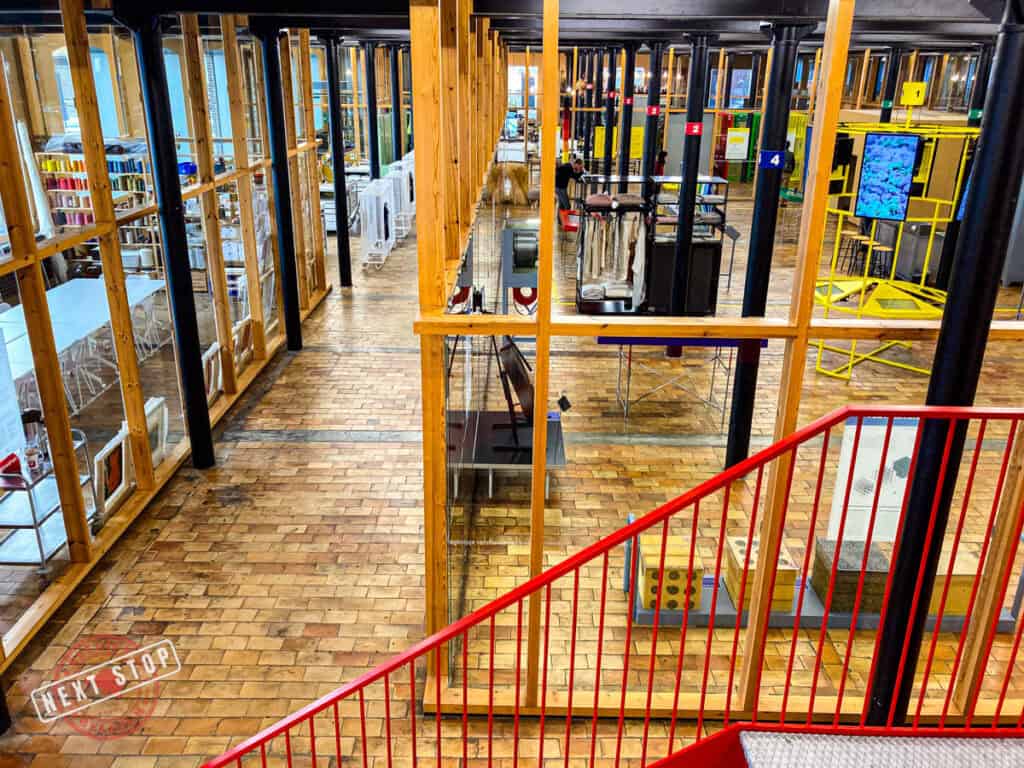
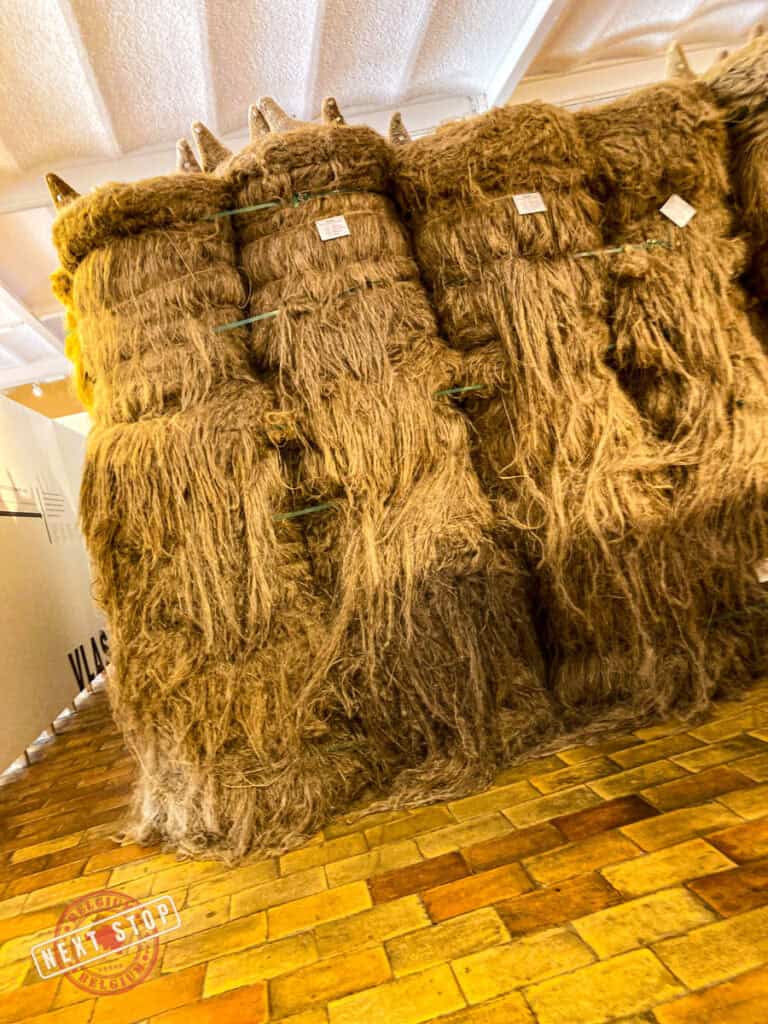
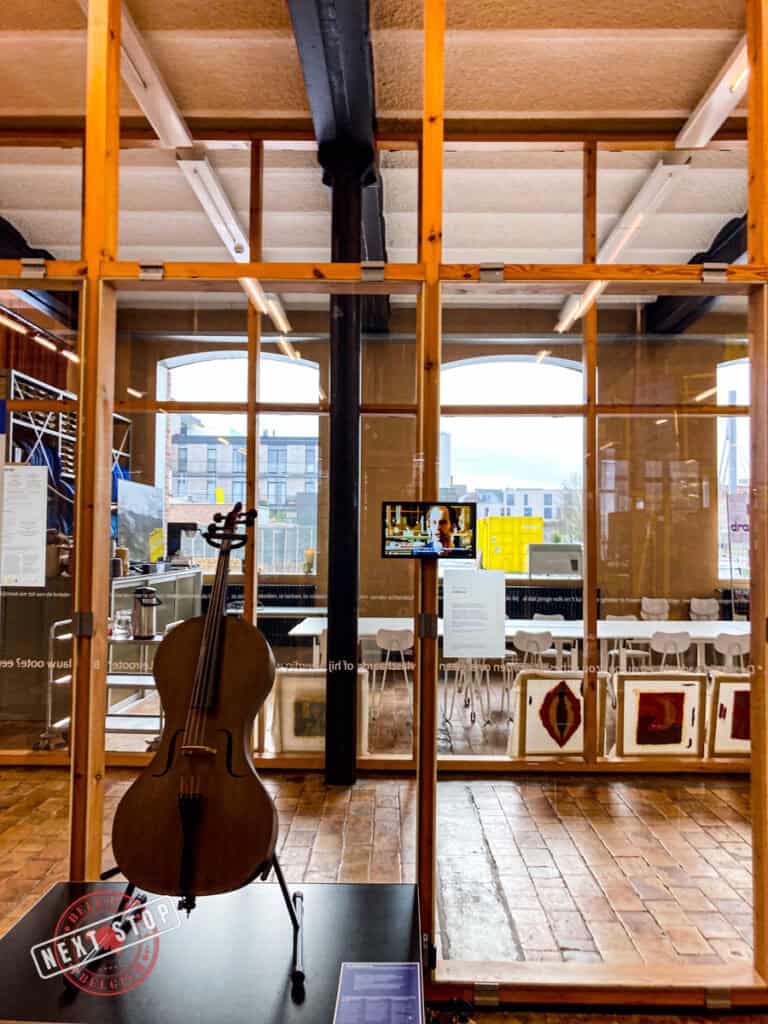
Some of the fascinating displays that caught my eye are the touch box where you can feel flax in a lot of different shapes and textures, and a microscope that lets you examine the fibres of different flax samples. I was also surprised to know that flax is used in some other products like bicycles, canoes, and cellos.
💡 Tip: Take a second to watch the video next to the cello. This cello-mastermind is my friend Benjamin Glorieux. His passion for music is contagious, check out some of his music performances on Youtube!


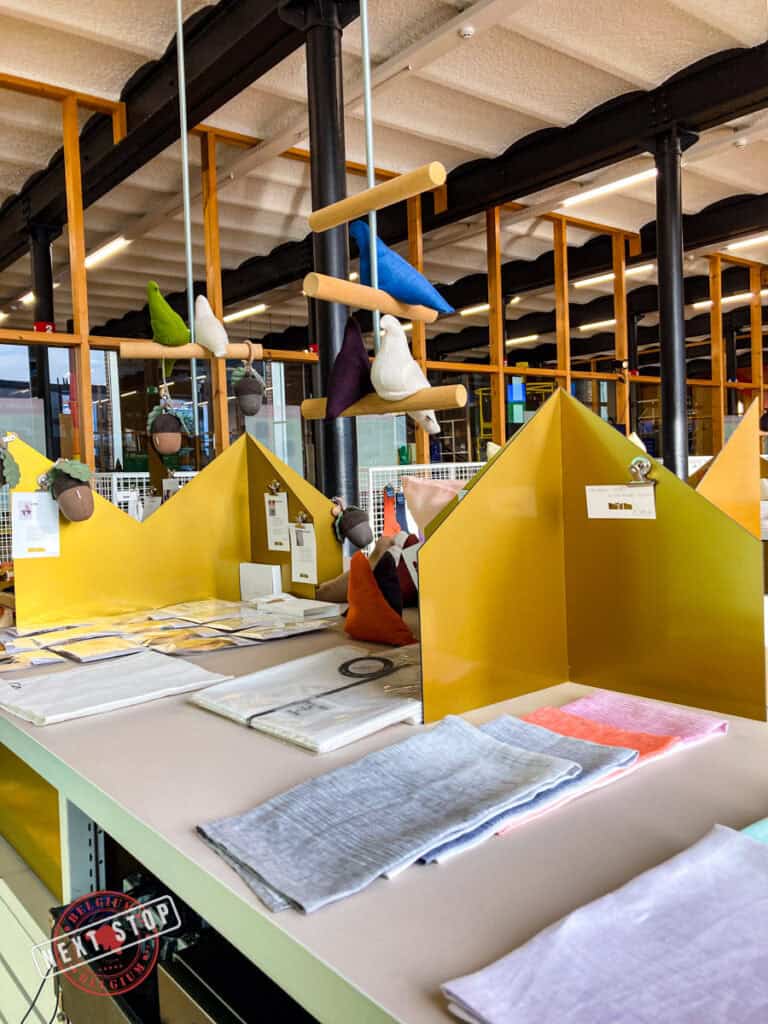
Throughout the museum, you can find pigeon-shaped stuffed animals made of flax to reference the historical background of the building.
We then took the bright red metal stairs up to the second floor where the Leie/Lys Room is.
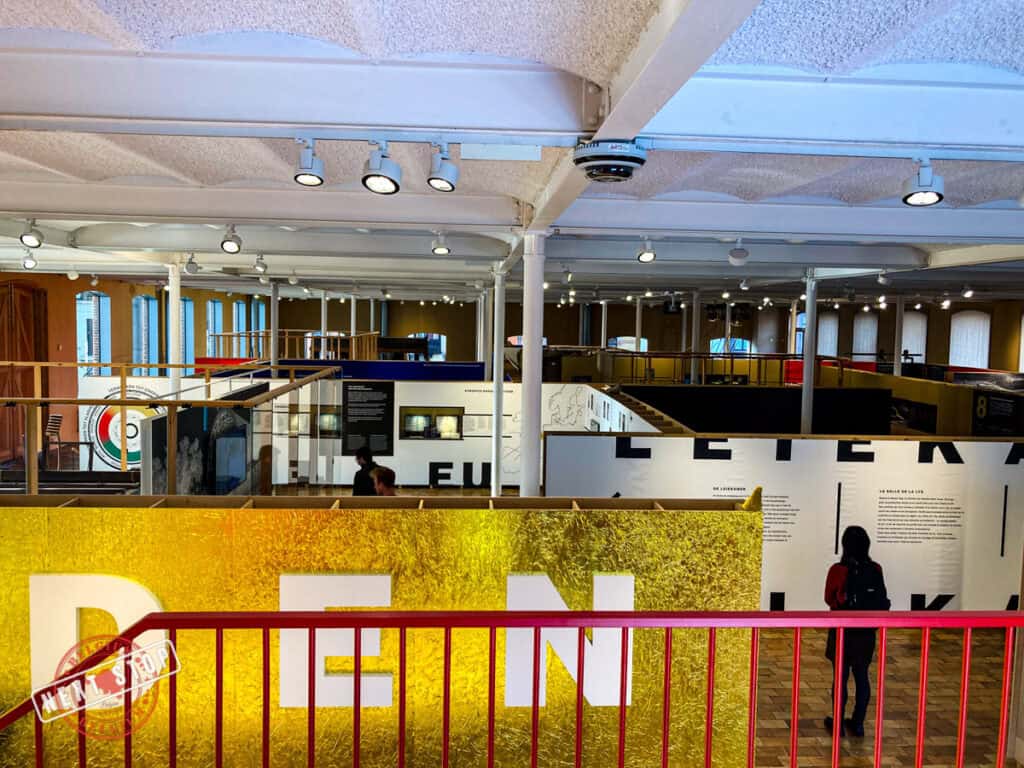
Unlike the Wonder Room, this gallery has a more traditional museum vibe to it. The space is filled with vintage textile work tools and machines, text boards, photographs, video testimonials, and interactive maps that explain the rich historical background of the flax industry in the Leie region.
There’s still some flax to touch (yay for the little one), a whole room where you can listen to stories from the locals and there’s a movie too.
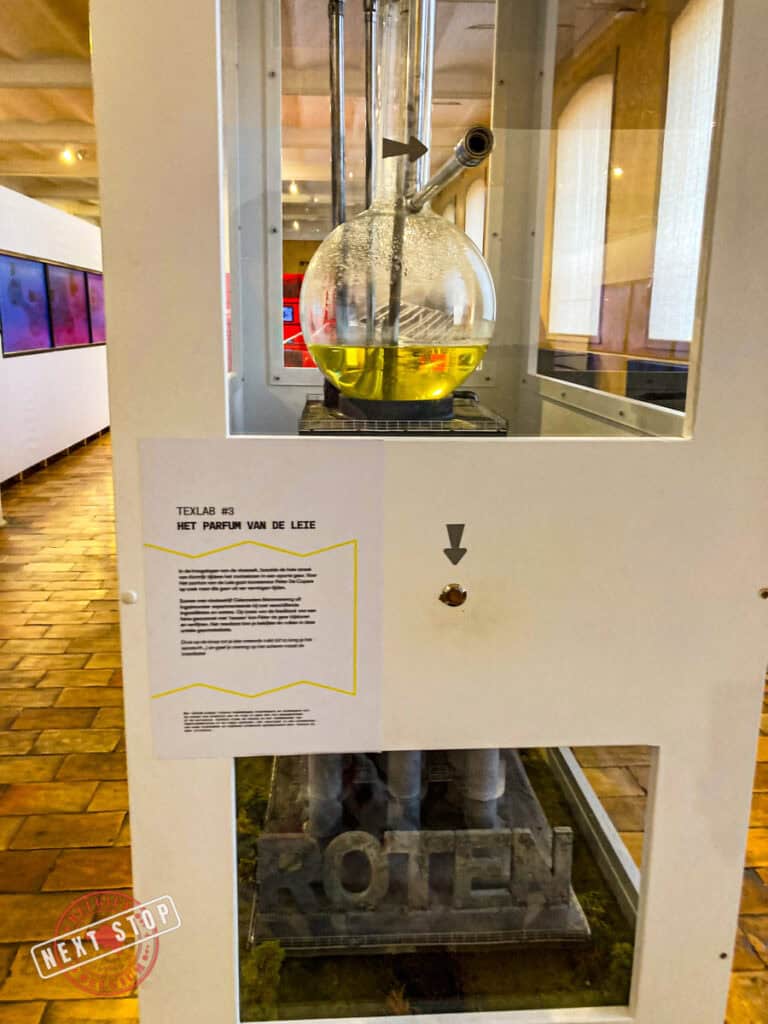
At the very end, you can find an installation that distils the scent of the river Lys back in the high days of the Flax industry. And you get to vote about how smelly you think it is!
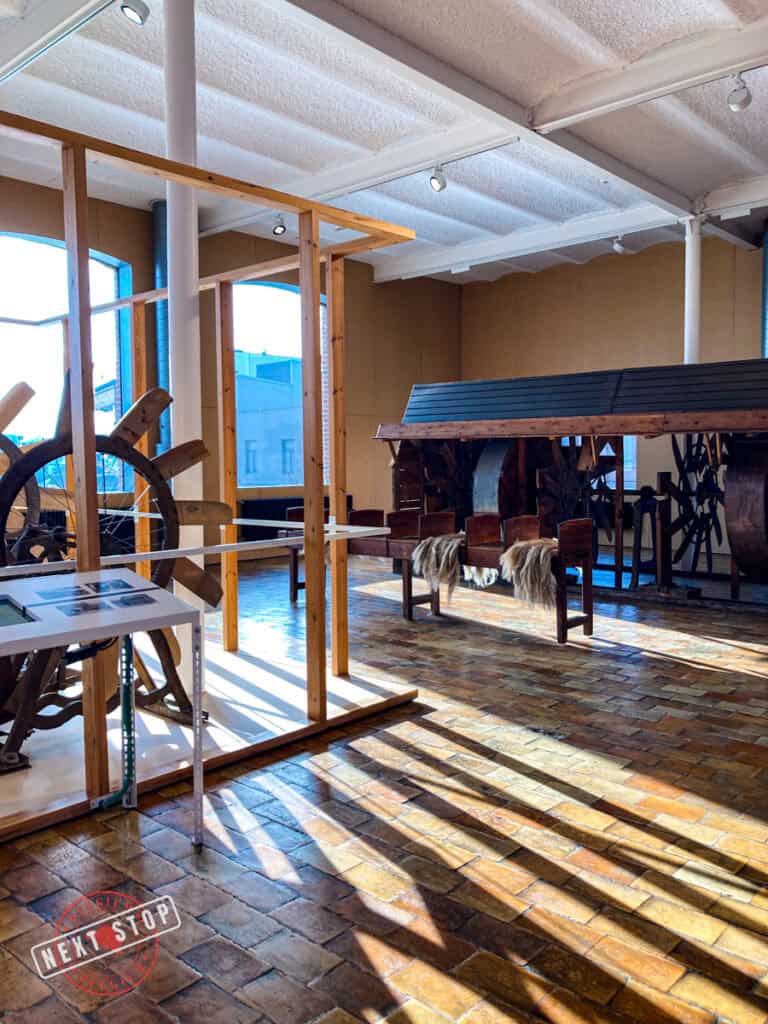
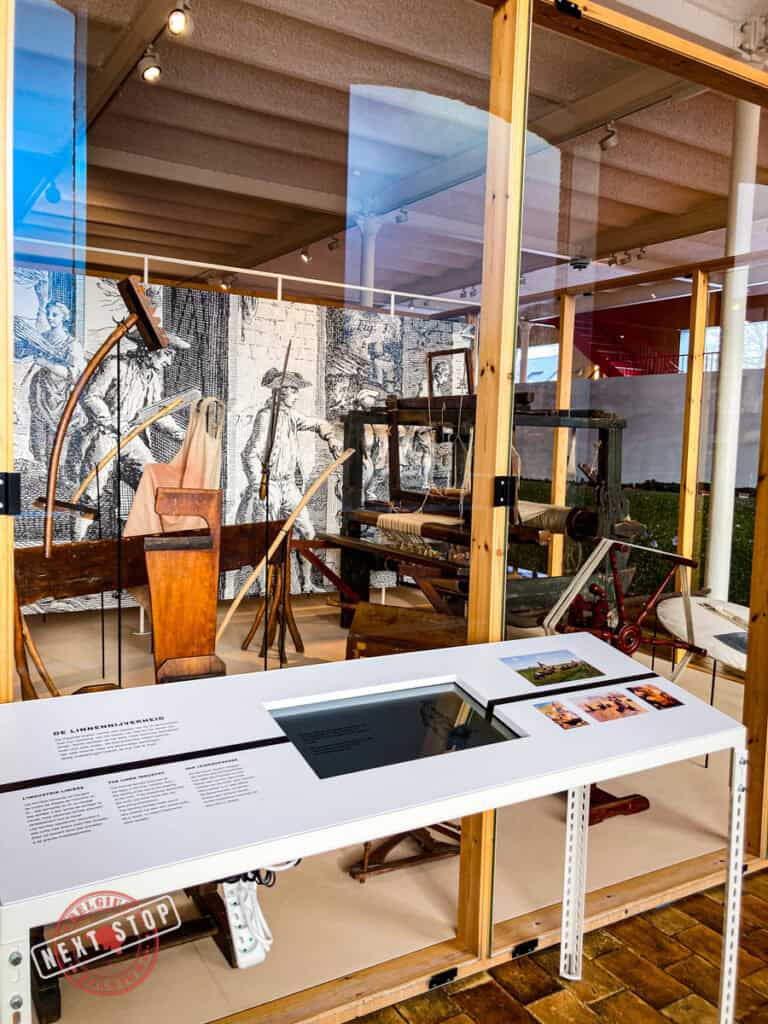
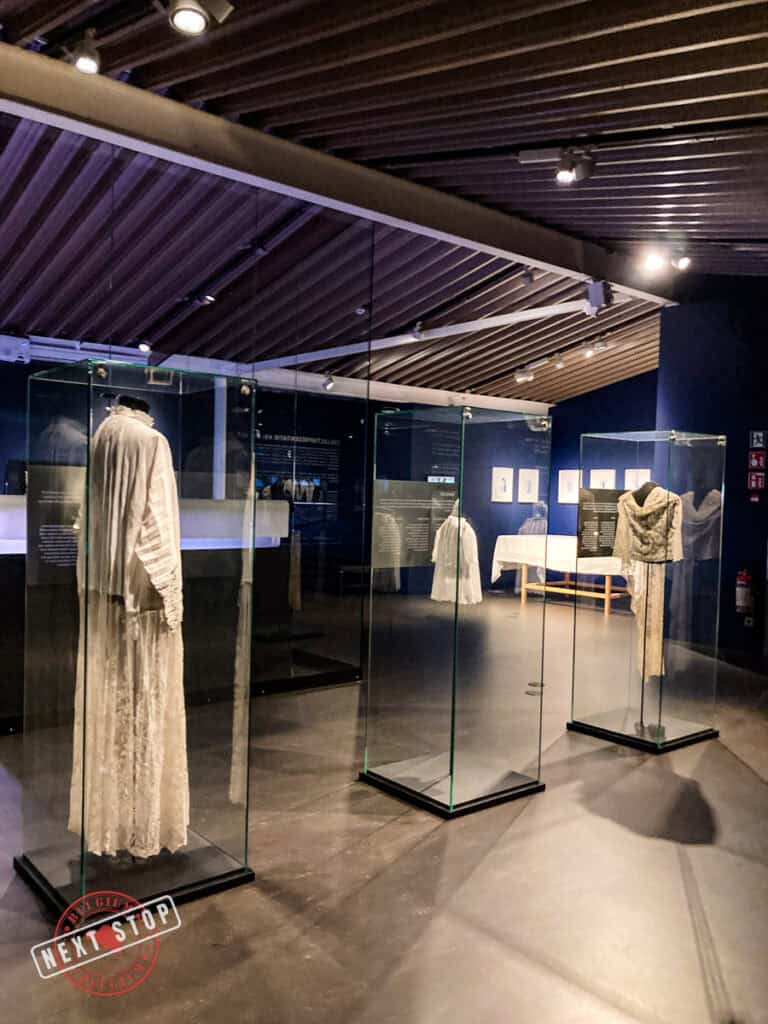
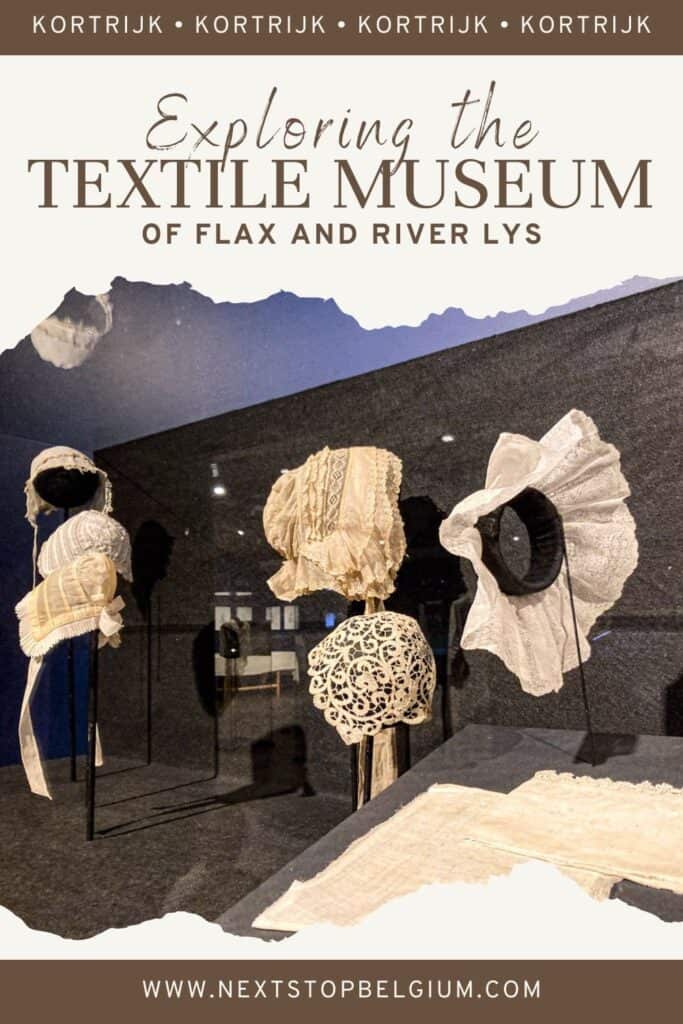
Finally, we decided to go to the top floor, which is called the Treasury Room, to see the beautiful collections of laces and damasks made from the 1600s till now.
It’s quite different from the two lower floors – it’s a dark room, perhaps to build up the contrast with all the white lace.
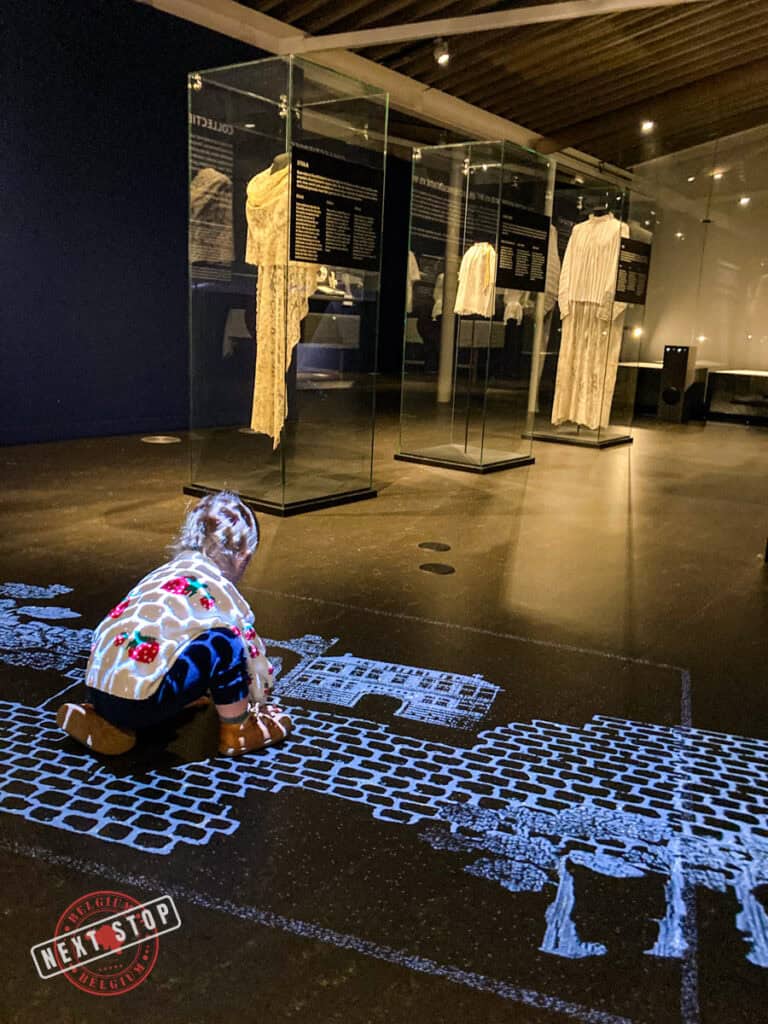
Among all the displays, my 2-year-old son mostly enjoyed the animations projected on the floor. There are audio installations as well.
Planning Your Visit To Kortrijk’s Texture Museum
Kortrijk may not be a major tourist destination, but it’s a gorgeous small city with lots of things to do.
Historically, it’s the most famous for The Battle of the Golden Spurs in 1302 (which you can learn all about at the Kortrijk 1302 Museum), but the flax industry makes up an important part of the city’s past as well.
If you want to learn more about it, here are some helpful details that will guide you on your upcoming trip to the Texture Museum.
Visiting With Kids
Although the museum is filled with various displays, it has lots of running space. The place is so spacious that my 2-year-old son kept running from one side to the other!
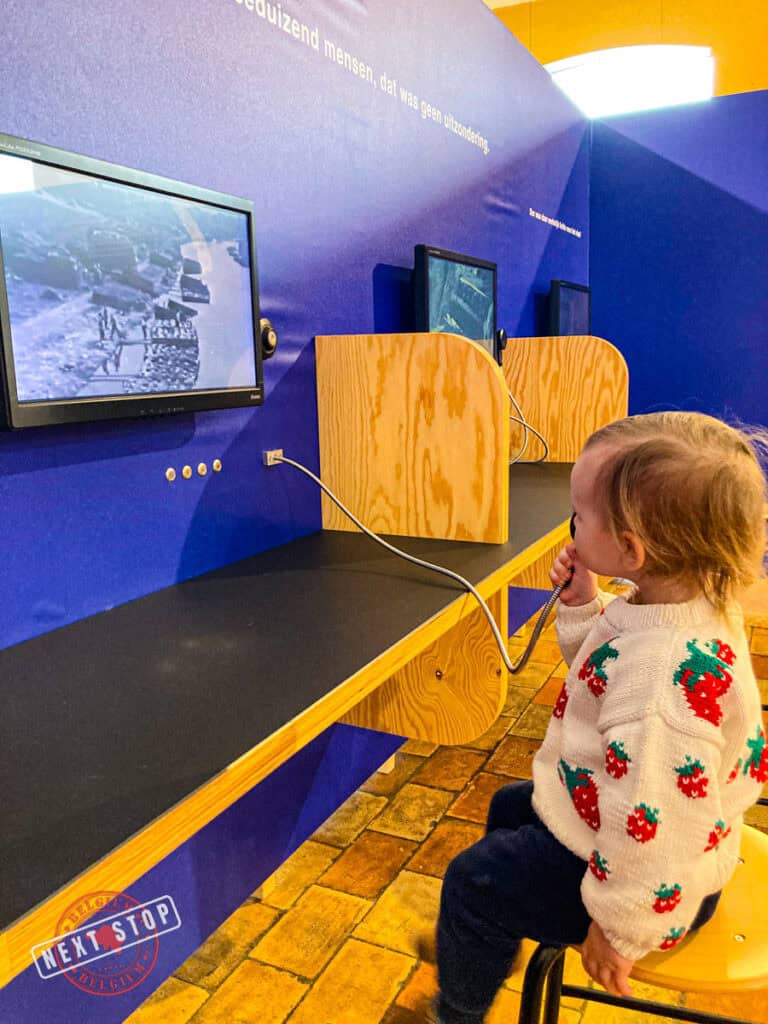
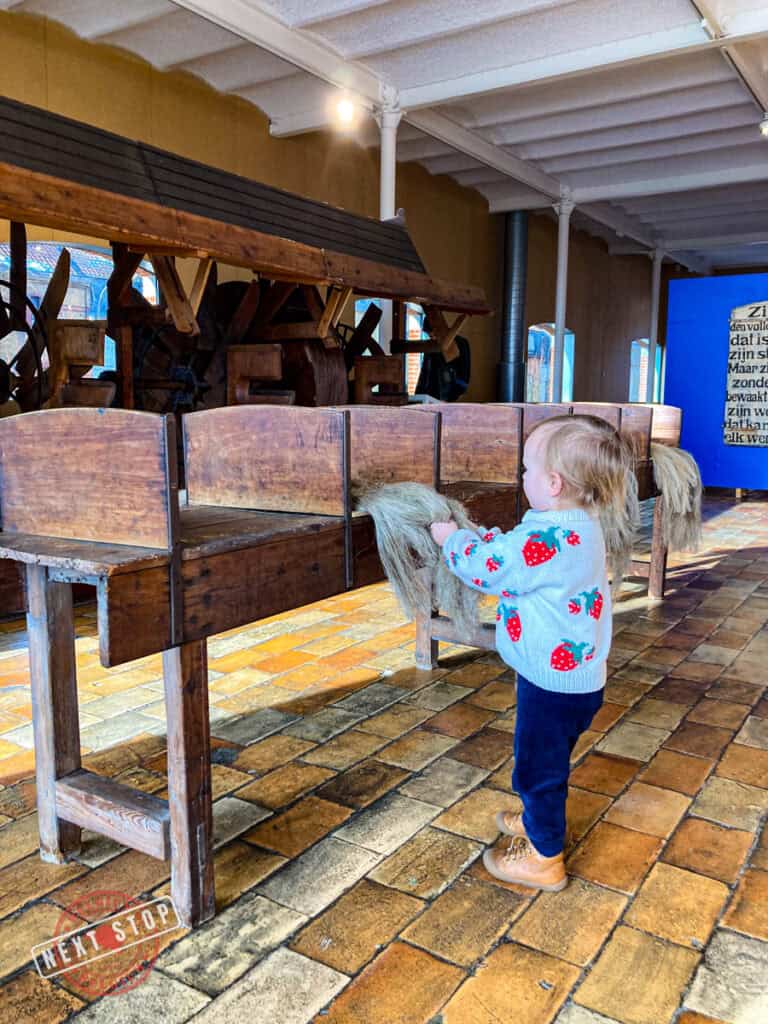
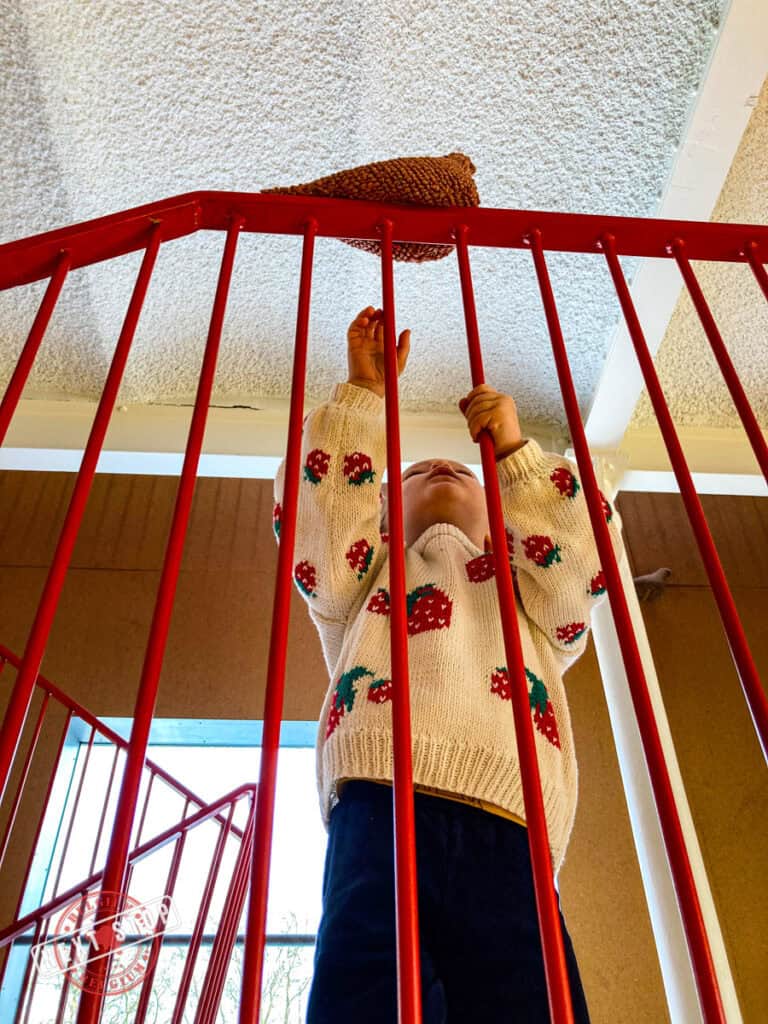
The Texture Museum also has multi-sensory and interactive displays that kept my little kid engaged. Kids can see, smell, taste, and touch flax materials and products, making it easier for them to understand and appreciate what it is.
Older kids can also enjoy the short animations projected on the floors. The audio narration on each video is approximately 3 minutes long, just enough to keep their attention.
There’s a family tour/game for kids age 6-12, but it’s only available in Dutch and French.
Beyond Kortrijk’s Texture Museum
If you walk along the banks of the Leie River, it only takes 14 minutes to reach the famous Broel Towers, it’s a great spot to have a picnic on the quays. Or maybe go for another museum-hopping trip at Kortrijk 1302. There’s also Buda Island nearby that you can visit in the summer to enjoy the beach.
🕵️ Make your visit to Kortrijk even more fun and exciting by doing a Self-Guided Sherlock Holmes Murder Mystery Game! Find out who murdered Baltazar while exploring every street and corner of the city. Click here to read more about this mobile app walking tour.
For lunch or dinner, head over to the Grote Markt, where you can find lots of restaurants that offer various types of cuisines!
Tips Before You Go
- It’s not necessary to buy your tickets in advance. I visited on a Saturday morning and there were 3 (!) other visitors.
- There’s a bathroom on each floor.
- The museum is easily accessible by wheelchair users. There’s an elevator and all floors have accessible bathrooms.
- There’s a museum cafe/restaurant next door. It’s open for breakfast (only with reservation!), lunch and dinner and everything in between. It looked really charming but was packed during lunch on the Saturday I visited, so keep that in mind.
So, is Kortrijk’s Texture Museum Worth Visiting?
Visiting the Texture Museum because of its excellent narration and preservation of the history of the local flax industry is already a given.
One thing that really makes the Texture Museum worthy of a visit is the unique experience they’re giving. It’s a multi-sensory, interactive museum that would play with your senses, be it sight, smell, taste, or touch. If you’re in for an educational yet fun adventure, then visit the Texture Museum!
Pin For Later
BELGIUM TRAVEL PLANNING GUIDE
🧳What to pack when visiting Belgium?
Check out our Ultimate Belgium Packing List and FREE Checklist, where you can find all the information you need before leaving for Belgium!
🛤️What’s the best way to get around in Belgium?
The best and most convenient way would be to rent a car. We always use Discover cars, they compare all the rental companies and give you the best rates. Of course, public transportation is also a great option, book your train and bus tickets here, to explore every corner in Belgium.
🖺 Do I need travel insurance in Belgium?
Yes – Starting at US$45 per month, get the assurance and security you need with a policy from SafetyWing – a renowned provider of travel insurance.
🚰Is it ok to drink tap water in Belgium?
Definitely YES! Unless there’s a sign that it’s not drinkable. While it is safe to drink tap water in Belgium, if you prefer the taste of mineral water, you can easily fill up a LifeStraw Bottle with tap water and take it with you wherever you go.
🎫 Where can I book my Belgium accommodations?
If you are looking online for accommodations, make your bookings for hotels in Belgium using Booking.com.
🔌Can I use my electrical devices (such as phone chargers) in Belgium?
The standard voltage and frequency of power outlets in Belgium are 230V and 50 Hz. If you want to use an appliance that runs on less than 230 volts, you should bring a separate voltage converter with you.
✈️ Can I get a direct flight to Belgium?
YES – Because Belgium is home to two large international airports, Brussels Airport (BRU) and Brussels South Charleroi Airport (CRL). You can check prices and book your flight with WayAway.
If this helped you plan your adventure, a coffee would go a long way in fueling my next guide! 😉
