Visiting the Kortrijk 1302 Museum
This article may contain affiliate links. This means we receive a small commission whenever you book or purchase something through our links (at no extra cost to you!). You can find more information in our disclaimer.
In the middle of the summer – and, by accident, on the 11th of July – we planned a day trip to Kortrijk. Despite having lived in Belgium our entire lives, we had never visited the city before but we were pleasantly surprised during our trip. Our first stop of the day was the Kortrijk 1302 Museum, one of the top things to do in Kortrijk. Read on to learn more about this exciting museum that will captivate both adults and children and teach you all about the Battle of the Golden Spurs.
Kortrijk 1302 Museum: A bit of history
What happened in 1302?
On the 11th of July of the year 1302, a large battle took place in Kortrijk. This battle of the Golden Spurs, as it was later called, was the culmination of the increasing tension between the French army of Philips IV and a group of militias from the Flemish region at the end of the 13th Century.
While Flanders was in theory still dependent on France, in reality, they were quite independent thanks to the trade with England. When France and England went to war, Flanders chose the English’ side. At that point, the French king decided to invade the Flemish cities to put them back in line.
Taxes were lowered, but only for the rich patricians. This caused tension between the French-minded aristocracy, the Leliaards and the working class that sided with the count of Flanders, the Liebaards/Klauwaerts. In 1302, many demonstrations led to a slaughtering in Bruges which caused the French kind to send his army as revenge.
On the 11th of July, both parties met on the Groeningekouter in Kortrijk. Both armies were about the same size, but the differences were palpable. The French side consisted of 8700 well-trained knights with a large amount of cavalry while the Flemish fighters were mostly crafts and tradesmen with only 350 men on horseback.
Against all odds – and for the first time in history – a group of peasants defeated a trained army.
Notwithstanding its significance in its own time, it wasn’t until the 19th century that the battle became such a highlight of the Flemish history. During this time, the economical, social and feodal aspects of the battle were put aside in lieu of the nationalistic tensions in the 19th Century. The victory of the Flemish Liebaards/Klauwaerts on the French-loving Leliaards formed a great example for the Flemish Movement that wanted more independence and appreciation for the Dutch language and the Flemish identity.
One of Belgium’s most famous writers, Hendrik Conscience, also wrote his book ‘The Lion of Flanders. The Battle of the Golden Spurs‘ in 1838. This romanticised version of the battle was an attempt to give a young country (Belgium became independent in 1830) some great heroes and it’s this version of the story that lives on in the minds of the people.
Where does the name ‘Battle of the Golden Spurs’ come from?
Originally, the battle was called ‘The Battle of Kortrijk’ or ‘The Battle of Groeninge’ but many chronicles mention the death of ‘Golden Spurs’ which is a synonym for the French knights. Only the nobility could afford golden spurs, the other cavalry members wore silver or metal ones.
Many documents and stories mention 500 golden spurs hanging in the Our Lady’s Church until 1383. However, recent archaeological research shows that even though there’s proof that the spurs could indeed be found at the battlefield, even if they did end up in the church they most likely would’ve been taken down in 1304 when French militia conquered the church.
At the end of the 17th century, the battle was called ‘Battle of the Golden Spurs’ for the first time, but it wasn’t until Hendrik Conscience’s story that the name became widely known and used.
The building
Two women – daughters of Walter van Kortrijk – founded the Rodenburg abbey at the end of the 13th Century. The name was later changed to the Abbey of Groeninge and was located mere meters away of the actual battlefield that took place on the Groeningekouter.
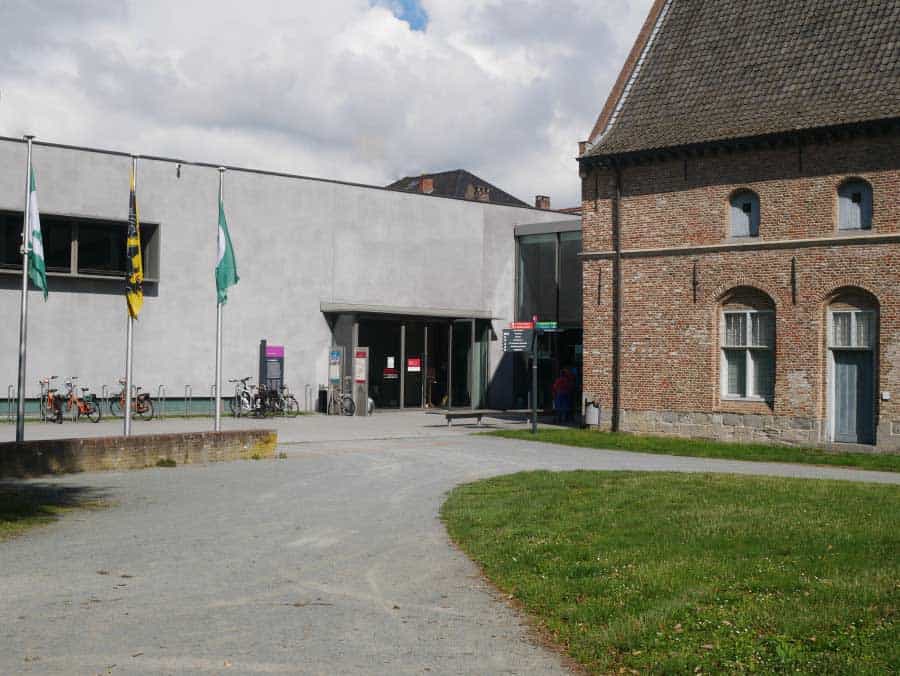
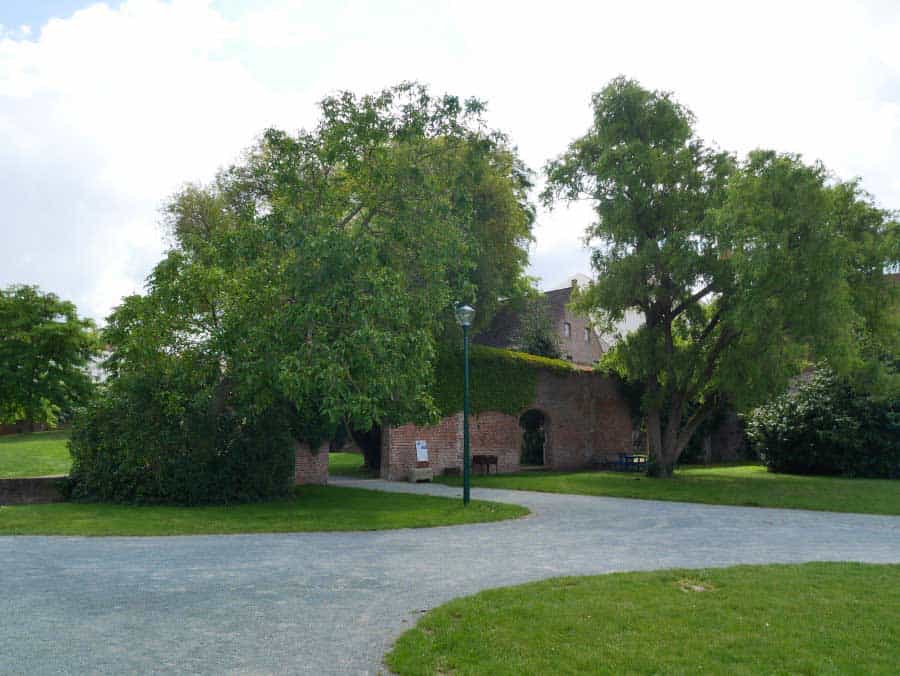
Nowadays, the Kortrijk 1302 Museum houses in three parts of the former abbey. The dormitorium (sleeping area) shows temporary exhibitions, the 17th Century chapel is part of the museum and the 19th Century chapel is now an auditorium/movie theatre. A modern building welcomes you into the museum.
Visiting the museum
For adults
Every adult receives an audio guide (available in multiple languages) that will tell you the rather complicated story of the Battle of the Golden Spurs through the eyes of Gilles Li Muisit – an abbot and eyewitness.

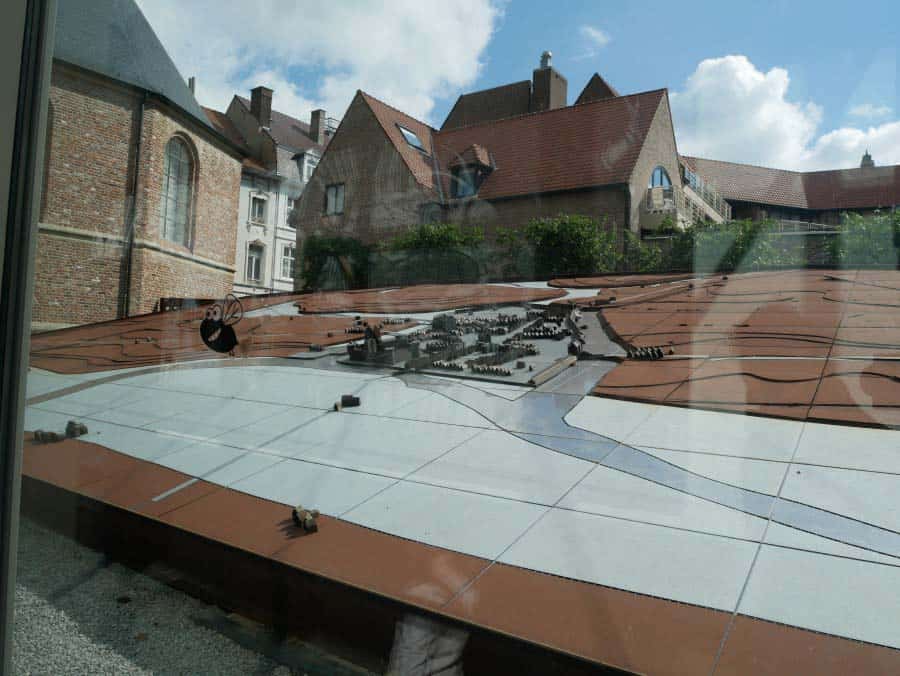
The tour takes about an hour and starts at the ground floor with three exhibition rooms. In the first, the setting is shaped, introducing you into the Flanders of the 13th Century. Turning the corner, you come into a long bright hallway, with impressive knights’ armour on one side (try on the helmets!) and a model of the battle on the patio outside. The last room is the most impressive one with lots of stories on the audio guide and many artefacts from the battle (such as Goedendags – a kind of stick with a very sharp metal point and spurs).

Upstairs, you can find more details on how the Battle was used in the language and nationalistic issues of the 19th Century and the implications of the famous work The Lion of Flanders by Hendrik Conscience.
To finish up the tour, there’s a 15-minute movie in the lovely auditorium that recapitulates the main storylines. Your audio guide voice Gilles Li Muisit is now accompanied by a couple of other characters that are interested in learning more about the history of the battle.
For kids
Kortrijk 1302 is a fun museum to visit with kids. In fact, our then 4,5-year-old daughter enjoyed it so much that she kept on asking to know more about knights and princesses long after.
There are two kids’ tours you can take at the museum.
The first one, Knight is looking for Princess, is meant for 5 to 7-year olds (although 4 or even 3 is definitely possible too if you ask us!) is the one we took. A cute white dog will guide you through the museum.
It starts with a large print-out of a tapestry that has some missing parts. The kids get a bunch of magnetic circles with two options each. They then have to pick the right one and put it at the correct place. Very interactive and fun for young and old!

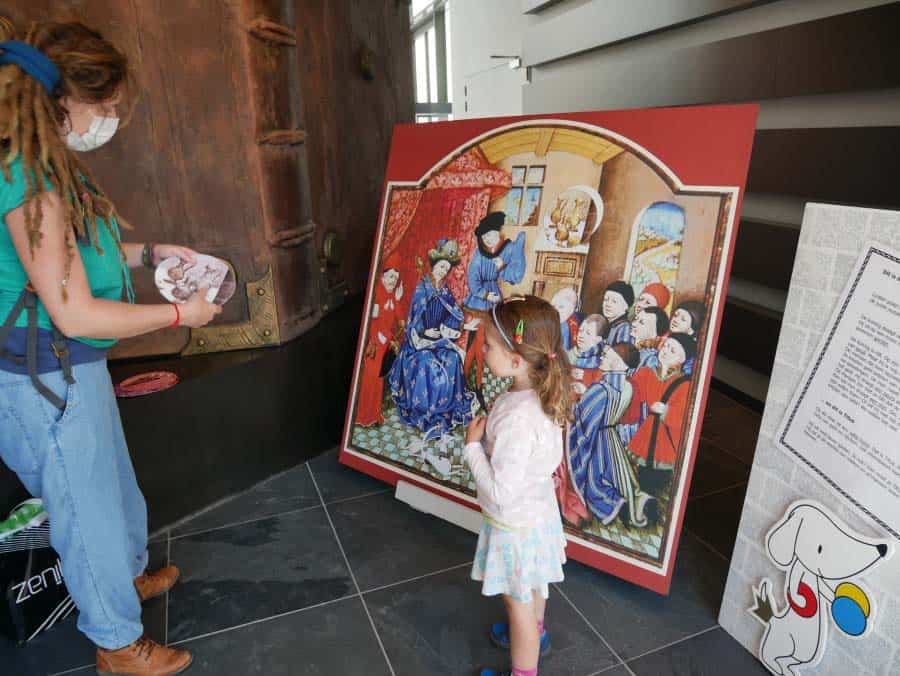
In the next room, there wasn’t a specific activity, but putting on the knight’s helmet and touching the spurs is exciting enough as it is!
But it’s in the large exhibition room that the true treasure awaits. First, there’s an activity where the adult(s) of your group read(s) a text and your kids have to point out the figures they’re seeing. After that, at the back of the room, there’s a large space with a huge mirror where everyone gets to dress up as a knight or princess! We definitely spend the majority of our time here turning our little one into a princess and a very cool knight!
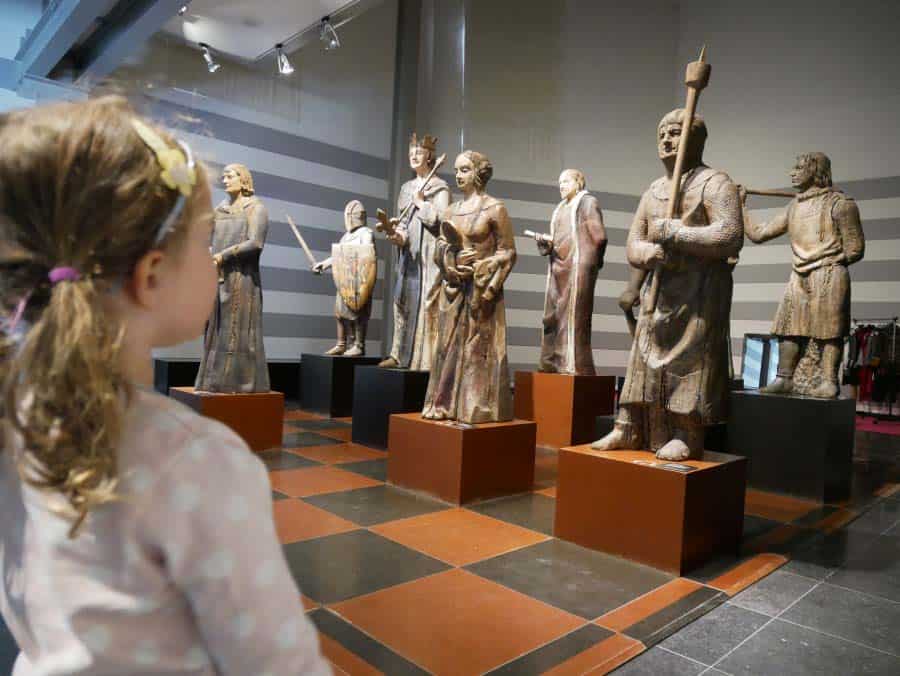
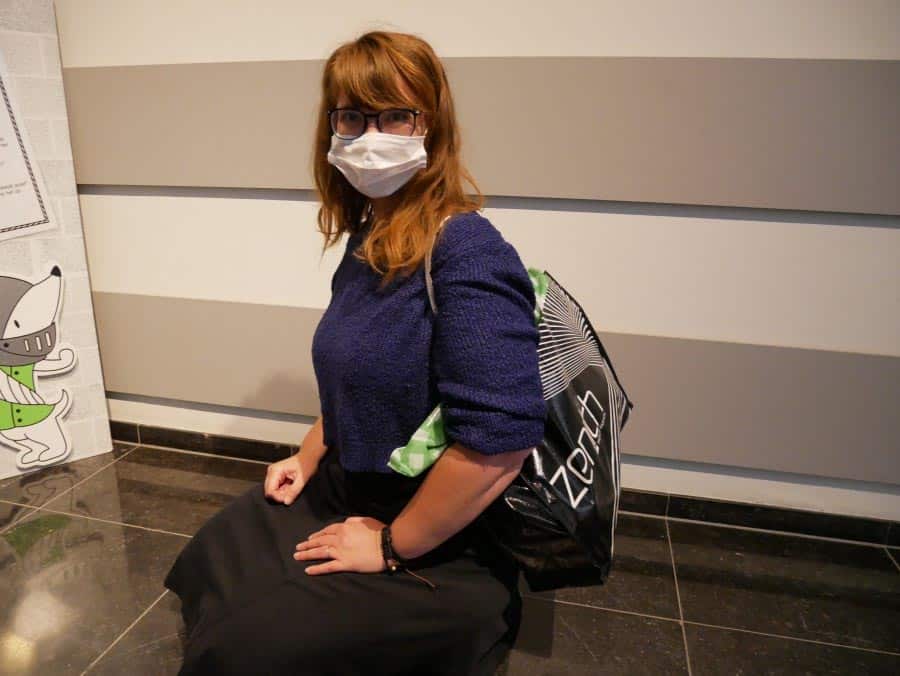


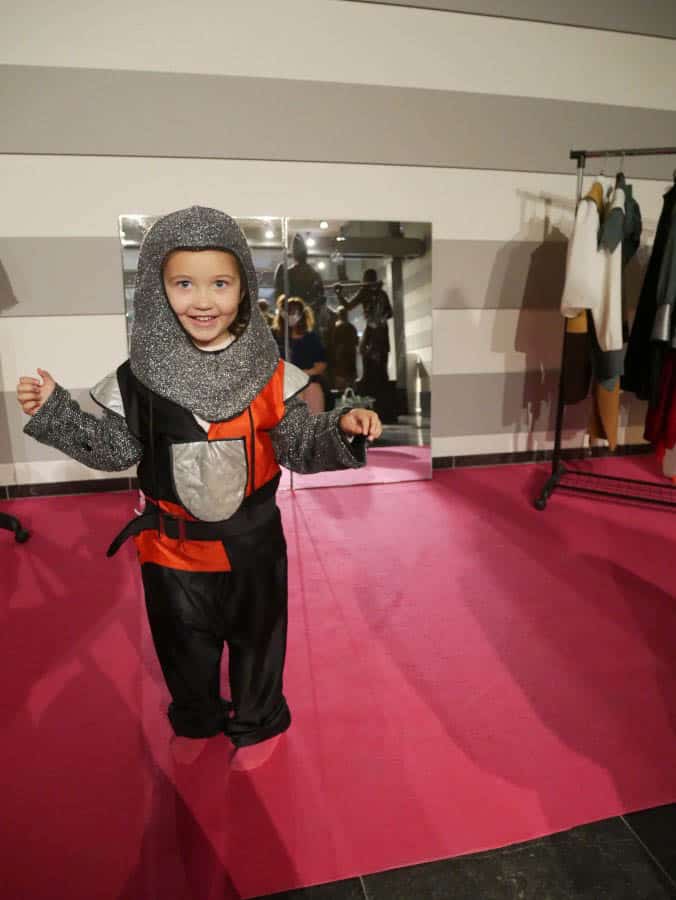

Lastly, under normal circumstances, there’s also a crafting area, but due to the Coronavirus, this wasn’t available at the time of our visit. Our daughter did get a drawing to take home which she loved!
In the upstairs area, there isn’t much to see for kids, but there are some long hallways to run around in if it’s not too busy. The tour ends with a movie which is always fun with little ones.
For 10 to 12-year-olds, there’s another tour called the ABC of 1302. And for 7 to 12-year-olds, there’s a treasure hunt through Kortrijk that takes 2 to 3 hours and brings you by the highlights of the city. However, both activities are only available in Dutch.
Practicalities
Entry to the Kortrijk 1302 Museum is free.
The museum is open every day from 10 to 17h.
Frequently Asked Questions
What is Kortrijk known for?
Kortrijk, a city in Belgium, is known for its well-preserved Medieval and Renaissance architecture. It is also renowned for the Battle of the Golden Spurs, a crucial conflict in Belgian history where Flemish forces defeated the French army.
What language is spoken in Kortrijk?
The primary language spoken in Kortrijk is Dutch, as it is a part of Flanders. However, most locals are also using English and some speak little German.
Is Kortrijk worth a visit?
Yes, Kortrijk is worth a visit! Kortrijk offers a blend of historical architecture, lively markets, and cultural attractions such as the Broel Towers, River Lys Bridge, International Rose Garden Courtrai, and many more. It has a warm and welcoming ambience making it a delightful destination for travellers.
Is Kortrijk safe?
Yes, It’s a peaceful city and is a safe place to visit for tourists.
Is Kortrijk good for students?
Yes, Kortrijk is great for students! It’s home to several universities and educational institutions offering diverse study programs with affordable living costs and plenty of recreational activities.
More about Kortrijk
BELGIUM TRAVEL PLANNING RESOURCES
Getting to Belgium: Fly into one of the main international airports: Brussels Airport (BRU) or Charleroi Brussels South Airport (CRL). Take an international train to Brussels South Station. Or take a ferry to Dover or The Netherlands, then drive or take the train to Belgium.
Getting Around: For the major destinations, the train is by far the best option. You can book your train tickets here. If you’d like to visit smaller places, the most convenient way would be to rent a car. We always use Discover cars, they compare all the rental companies and give you the best rates.
Accommodation: Booking.com is the most popular accommodation platform in Belgium. It’s what I use every single time.
Guided tours: Use Get Your Guide or Viator to find fun tours in Brussels, Bruges, Ghent and Antwerp. Or Guruwalk to find free walking tours in multiple destinations.
If this helped you plan your adventure, a coffee would go a long way in fueling my next guide! 😉
