21 Castles in Belgium You Should Definitely Visit
This article may contain affiliate links. This means we receive a small commission whenever you book or purchase something through our links (at no extra cost to you!). You can find more information in our disclaimer.
You might know Belgium for its beer, chocolate, and gorgeous architecture, but did you know that the castles in Belgium attract many tourists as well?
With the highest density of castles per square meter in the world, the tiny country packs over 3000 stunning castles ranging from fairytale-like buildings to Medieval fortresses and luxurious mansions. Belgian castles are definitely a good reason to visit Belgium!
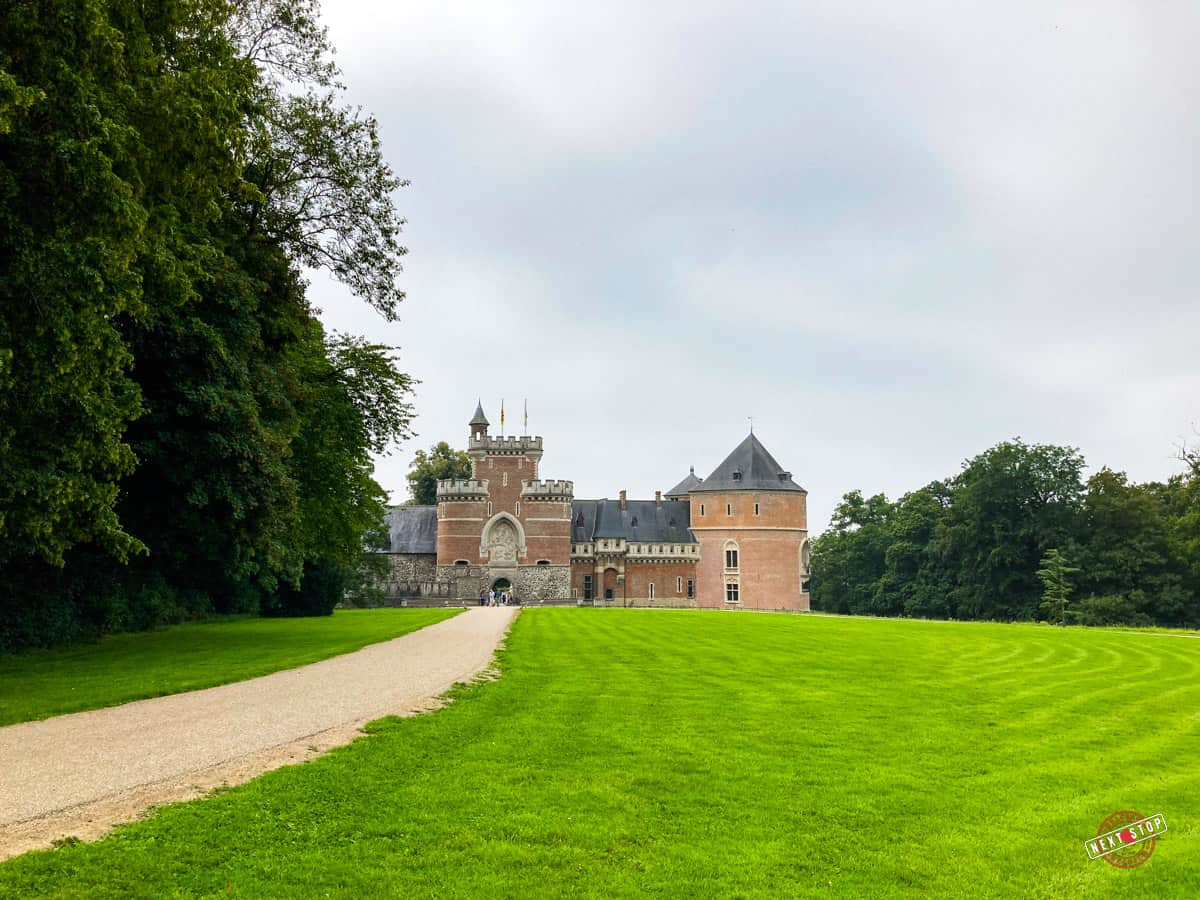
The 21 most beautiful castles of Belgium
1. Château de Vêves (Dinant)
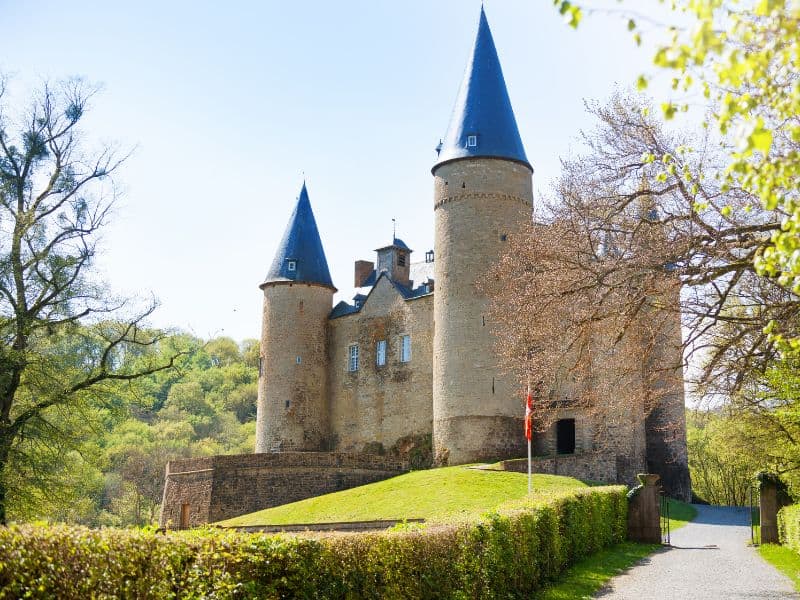
The Vêves Castle, Belgium is generally considered to be one of the most beautiful castles in Belgium.
The castle is already mentioned as early as the 7th Century, making it one of the oldest Medieval castles in Belgium as well.
The building was destroyed and rebuilt several times (once in the 13th Century and once in the 15th Century) and received its current fairytale look during the Renaissance.
practical information
🕒 Open during weekends and holidays, from 10:00 to 17:00 | During Easter and Summer Holidays, the castle is open every day!
📍 Rue de Furfooz 3, 5561 Houyet, Belgium
🎫 A ticket costs €9.50 (adults),
🎫 €8.50 (seniors/students 13+) or €6.50 (kids 4-12).
Children under 4 are free.
It includes an individual tour through the castle (and kids get to dress up as princesses and knights) that takes about 45 minutes.
You can also book a guide (available in Dutch, French, English or Spanish) for €75. This tour takes 75 minutes.
💡 TIP WITH KIDS: For €2 extra you get to go on a treasure hunt through the castle!
2. Gravensteen (Ghent)

The Gravensteen Castle Ghent, also known as the Castle of the Counts, is a Medieval fortress with a spectacular location in the historic centre of Ghent.
The first fortifications date back to the 9th Century and while more buildings and comfort were added throughout the centuries, it was Count Philips of Alsace who had a new castle built in the year 1180.
His aim was to keep control over the people and show his power in an, at that time, pretty turbulent Ghent.
The castle functioned as the residence for the Count of Flanders and later – while getting more and more in decline – as a court and a prison.
In the late 18th Century the Gent Castle of the Counts was turned into a cotton factory and housed around 50 families who worked in the cotton mill.
Ultimately, when they left, the castle was scheduled to be demolished.
Fortunately, the city of Ghent stepped in and began a huge renovation at the end of the 19th Century.
Many details were added to make it resemble its 12th Century shape, although not all seem to be historically accurate. The Castle of the Counts, Ghent was restored in all its glory by the time of the 1913 World Expo in Ghent.
Visitors can discover the gatehouse, the keep, the ramparts, the count’s residence, and the stables but most noteworthy during a visit to the Gravensteen castle, Belgium is the unique collection of torture equipment.
Also, make sure to grab the free audio guide (also available in sign language!) where Ghentian comedian Wouter Deprez will tell you more about the castle’s history with some funny anecdotes.
practical information
🕒 Opens at 10:00 to 16:00
📍 Sint-Veerleplein 11, 9000 Gent, Belgium
🎫 Regular €13.00
Children 13-18y €2.70, under 12 are free
Seniors and people with a disability get a discount (€8)
✔️ Buy your tickets here.
3. La Citadelle de Dinant (Dinant)
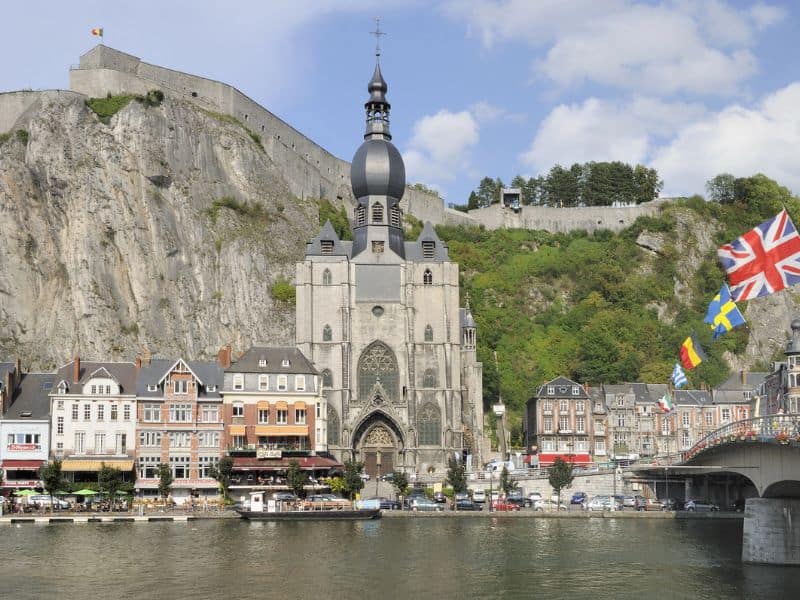
The Citadel of Dinant is located on a large rock overlooking the town of Dinant and makes for a magnificent sight in one of the most beautiful places in Belgium!
Thanks to the turbulent history of the city, the castle has been demolished and rebuilt quite a few times.
The first building dates back to 1040 when a fortress with two round towers protected the city of Dinant. During the 13th Century, city walls were erected with no less than 10 entry gates.
In 1466, the Citadel was destroyed for the first time by the armies of Philip the Bold. In 1530, the Prins Bishop of Liège had the fortress rebuilt and expanded with new buildings.
However, in 1675, the French army occupied the Citadel and blew up the whole thing when they eventually fled in 1703.
In 1818, the Citadel was rebuilt a final time when the city fell under the United Kingdom of the Netherlands (The Netherlands, Belgium & Luxembourg).
During the two World Wars, Dinant suffered quite severely, however, the Citadel luckily wasn’t destroyed. Ever since the end of WW II, the Dinant castle has been in use as a museum about weapons and history.
To climb to the top you can choose between the 408 stairs that date from 1577 or take the easy/scenic route with the cable cart.
It’s also possible to drive up (free parking spots at the top included!).
practical information
🕒 Opens from 10:00 to 18:00
📍 Chem. de la Citadelle 1, 5500 Dinant, Belgium
The 3-in-1 Package (citadel, cable car, cruise)
🎫 €20 for adults and €15 for children
Standard Package (citadel and cable car)
🎫 €12 for adults and €10 for children
🐶 Dogs allowed inside
4. château de Beloeil (Beloeil)
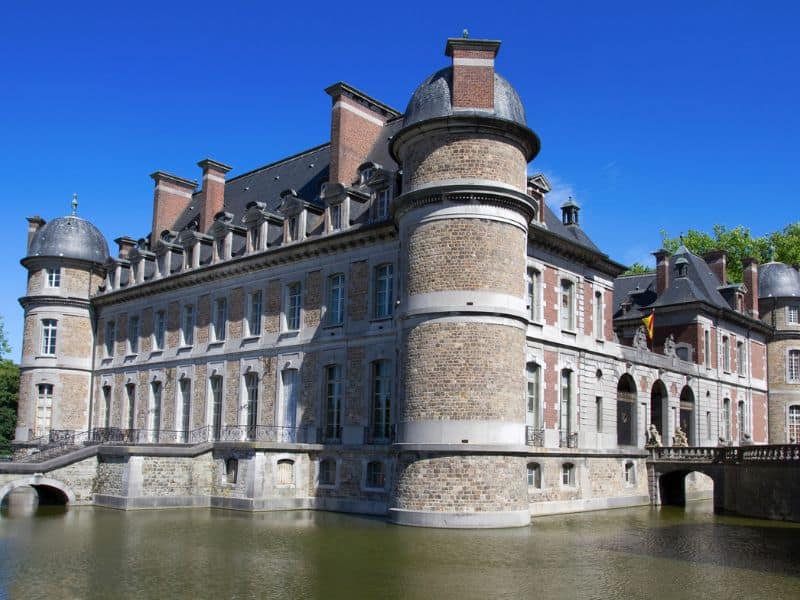
The Beloeil Castle is an impressive castle that is the property of the Princes of Ligne and can be found in the Henegouwen/Hainaut province. It is called “the Versailles of Belgium”.
The exact building date has yet to be discovered, but it definitely began its life as a Medieval fortress. Throughout the centuries, the castle was expanded and evolved into a country house.
The Ligne family made its permanent move to the Château de Beloeil in the 15th Century and started designing the grounds surrounding the castle.
At the end of the 17th Century, two wings were added to the inner courtyard.
These wings survived the fire that destroyed the rest of the castle in 1900. Luckily, it got rebuilt only a couple of years later.
Nowadays, individual visits to the castle and the 25-hectare gardens are possible as well as renting the property for film productions or exclusive parties and weddings. It’s a great place to visit in spring when everything is blooming.
practical information
🕒 Opens Monday-Thursday 8:30 to 16:30 | Friday 8:30 to 14:30
📍 Rue du Château 11, 7970 Beloeil, Belgium
🎫 Adults, castle and park €12, park only €6
🎫 Children 6-12yo, castle and park €6, park only €3
🎫 Seniors (65+), students (12-18yo); castle and park €11, park only €5
🎫 PWD, castle and park €5, park only €3
🐾 Dogs are allowed in the Estate
5. Kasteel van Horst (Holsbeek)
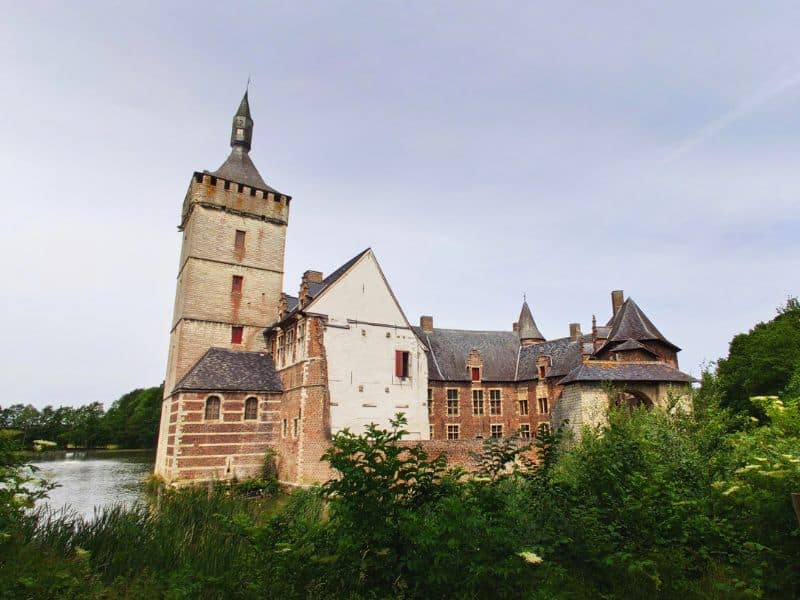
If you’re looking for a castle that will make you feel like a true knight, Horst Castle Belgium is the one you want!
This moated castle can be found in the hills of the Hageland, a region in the Flemish Brabant province.
The original Lords of Horst lived here from the 13th Century and the typical square shape dates back to the 15th Century.
It was expanded some more in the 17th Century by adding two wings around the inner courtyard and the coach house.
The large pond creates a wonderfully peaceful atmosphere and as the castle grounds are owned by the Agency for Nature and Forests, they can be visited at any time.
Horst Castle is also famous as the residence of De Rode Ridder (The Red Knight), a cartoon figure created by comic book artist Willy Vandersteen.
practical information
💡Due to renovation schedule varies
🕒 August, daily except Tuesdays, 11:00 to 17:00
🕒 September, only on weekend, 11:00 to 17:00
📍 Horst Castle, Horststraat 28, 3220 Holsbeek, Belgium
🎫 Adults €12, students (6-18 yo) €6
🎫 Family €30 (2 adults, 4 children)
🐾 Pets are not allowed
⚠️ Due to renovation not accessible for people with reduced mobility.
6. Château de Chimay (Chimay)
Chimay Castle is a Medieval fortress that was first mentioned in 1119. It is located in the south of the province of Henegouwen/Hainaut. It is private property owned by the Princes of Chimay.
Over the centuries, many changes have been made and several parts, such as towers, were added.
The first picture of the castle dates back to the 16th Century. In the 17th Century, a large part of the Château de Chimay was destroyed during a siege and it took until the 19th Century until it was restored.
Unfortunately, the castle was destroyed almost completely (again) in 1935 during a fire after which it was rebuilt in Renaissance style.
practical information
🕒 Opens daily except Fridays from 10:00 to 17:00
📍 Rue du Château 14, 6460 Chimay, Belgium
🎫 €10 (adults), €9 (60+)
€8 (kids 7-11)
Children <6 are free
TIP WITH KIDS: You can also book a minigolf ticket for €5 and play a game in the courtyard. It’s located close to the Abbey of Scourmont, where the Trappist Belgian beer Chimay is produced.
7. Kasteel Borrekens (Vorselaar)
Borrekens Castle, Belgium is a neo-gothic moat castle that dates back to 1270.
It was built in white sandstone from Grimbergen and the largest parts survived throughout the centuries.
It is located in Vorselaar, in the province of Antwerp, and it was originally built by the knights of Vorselaar. Therefore, it’s also often called the Castle of Vorselaar.
At the end of the 17th Century, the castle was renovated and received a stone wall surrounding the property. Eventually, at the end of the 19th Century, the mayor of Vorselaar led the ultimate renovation that gave the castle its current neo-gothic look.
practical information
🕒 Borrekens Castle is not open to the public | “Castle Walk” is possible
📍 Vispluk 3, 2290 Vorselaar, Belgium
Note: You can find the route here (p.7)
8. Torenhof (Brasschaat)
The Torenhof castle in Belgium is an eclectic Belgian château with neo-Renaissance elements that was built at the end of the 19th Century.
It is surrounded by a large park with a pond.
Nowadays, it’s mostly known as the castle that was used in Tim Burton’s Miss Peregrine’s Home for Peculiar Children.
With stars such as Samuel L. Jackson, Eva Green and Judi Dench, the 2016 movie is a true Hollywood movie.
Thanks to the production team, the castle received quite a bit of a makeover, including a much greener garden and a spectacular conservatory that reminds a bit of a birdcage.
practical information
🕒 Unfortunately, the Torenhof Castle can’t be visited
📍 Bredabaan 502, Brasschaat
9. Château de Noisy / Miranda castle (Celles)
Château de Noisy or more commonly known as Miranda Castle used to be one of the most famous abandoned castles in Belgium.
The neo-gothic castle seemed to come straight out of an (honestly, a bit creepy) fairytale, but this story didn’t get a happy ending, unfortunately.
The build of Miranda Castle, Belgium started in 1866 by architect Edward Milner but he passed away before completing it. It eventually got finished in 1907.
During WWII, the battle of the Bulge took place at the grounds and it was later occupied by the Nazi’s.
In the Fifties, the castle received a new name “Château de Noisy”, Belgium when it was taken over by the National Railway Company.
It got turned into an orphanage and a holiday camp for sickly children.
In 1991, Château Miranda, Belgium became completely abandoned and fell prey to vandalisation and overall decay.
It became a popular venue for Urban Exploring but after several floors nearly collapsing, it was ultimately demolished in 2017.
Noisy Castle, Belgium was used as a filming location for several Belgian productions but is most commonly known as Castle Lecter in the television series Hannibal (2013-2015).
practical information
🕒 Temporarily Closed
📍 Rue du Château 14, 6460 Chimay, Belgium
10. Gaasbeek Castle
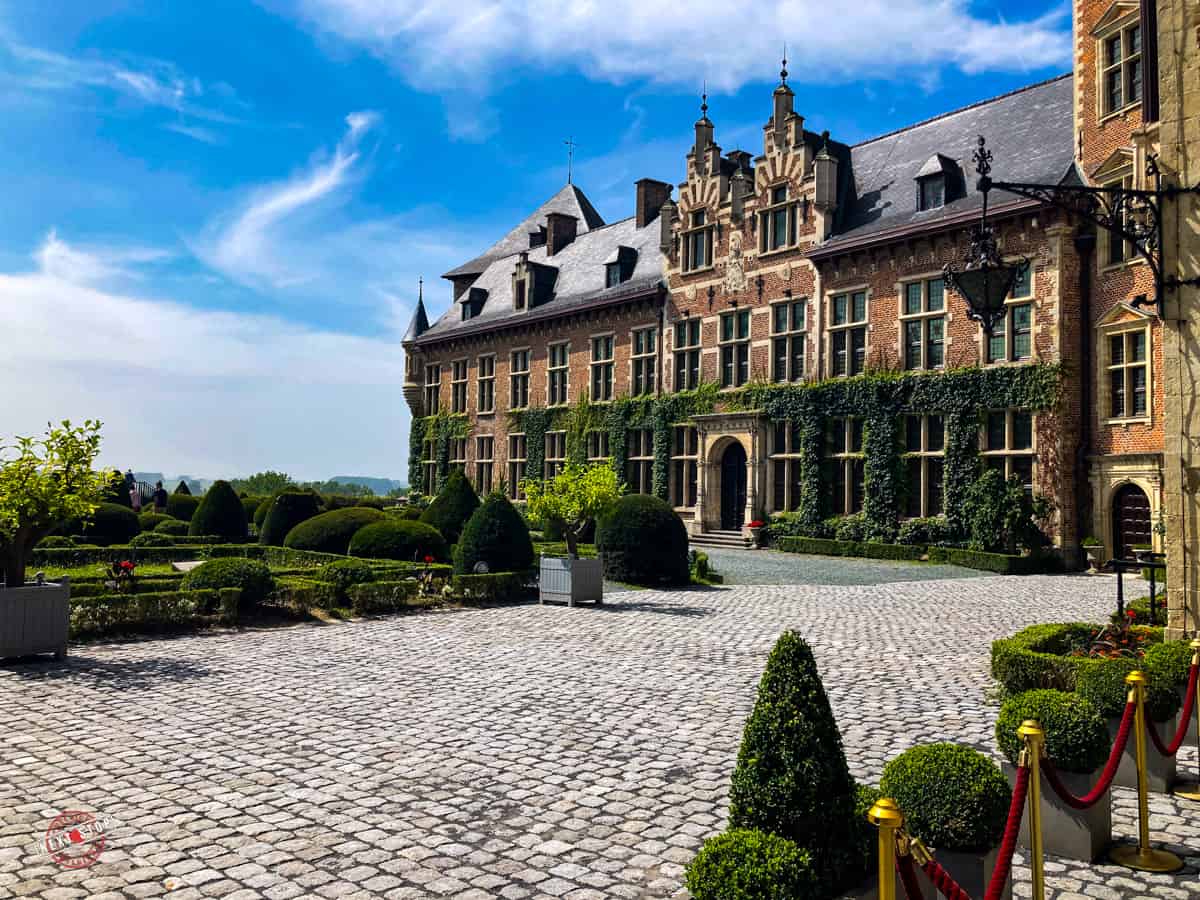
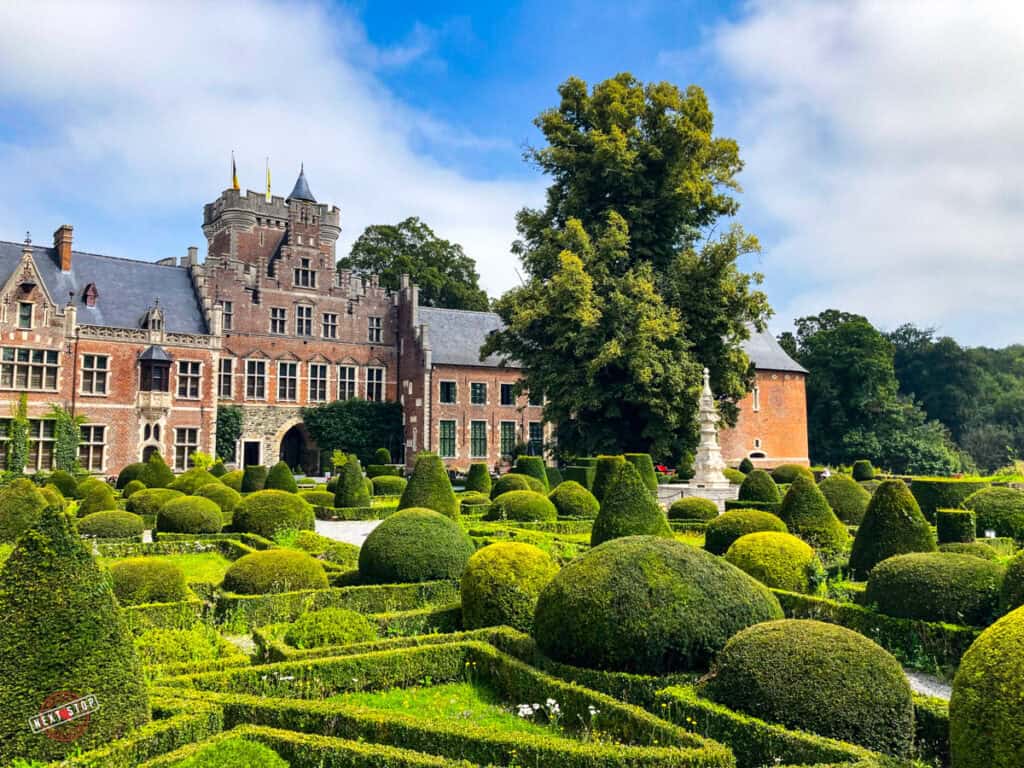
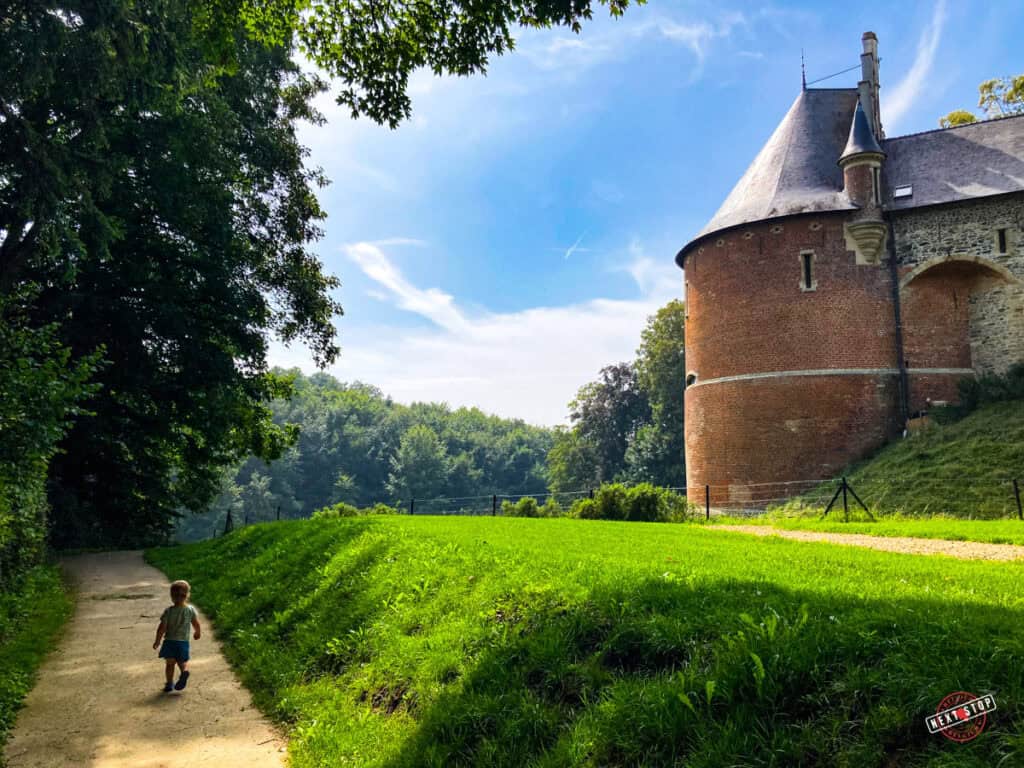
Kasteel Van Gaasbeek is located in the village of Gaasbeek. It was built around 1240 to defend the Duchy of Brabant against the County of Flanders.
At this time, Gaasbeek Castle serves as a national museum. It contains enormous art collections that are decorated into historical rooms since the castle was owned by the Flemish Community in 1980. It holds one remarkable piece by the famous Flemish painter, Peter Paul Rubens.
practical information
🕒 Opens from 10:00 to 18:00
📍 1750 Lennik, Belgium
🏰 Castle
🎫 Standard €12, students €8, under 18 &PWD free
🪷 Museum Garden
🎫 Standard €7, students €6, under 18 &PWD free
Combination
🎫 Fixed rate €15, students and Museumpass holder free
🅿️ 2 parking spaces for visitors with disabilities
🐶 Assistance dogs are allowed
11. Castle of Freyr
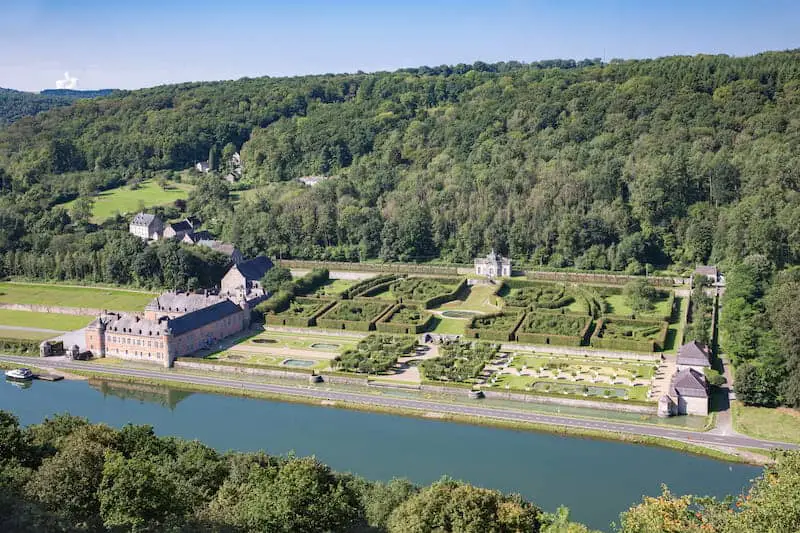
The Castle of Freyr is a former summer residence of the Dukes of Beaufort-Spontin.
The castle is filled with ponds, fountains and water features with a huge garden. Surrounded by trees and a lot of things to seek after in visiting the castle.
The castle is inhabited by the family of the Dukes of Beaufort-Spontin, the families of Baron Bonaert and the Count of Laubespin at the present time.
practical information
🕒 Opens from Tuesday to Sunday from 11:00 to 17:00
📍 Freyr 12, 5540 Hastière, Belgium
🎫 Adult €10, senior and students €8, children are free to enter
🐾 Dogs allowed on a leash only in the gardens
⚠️ Limitations for persons with reduced mobility
12. Alden Biesen Castle
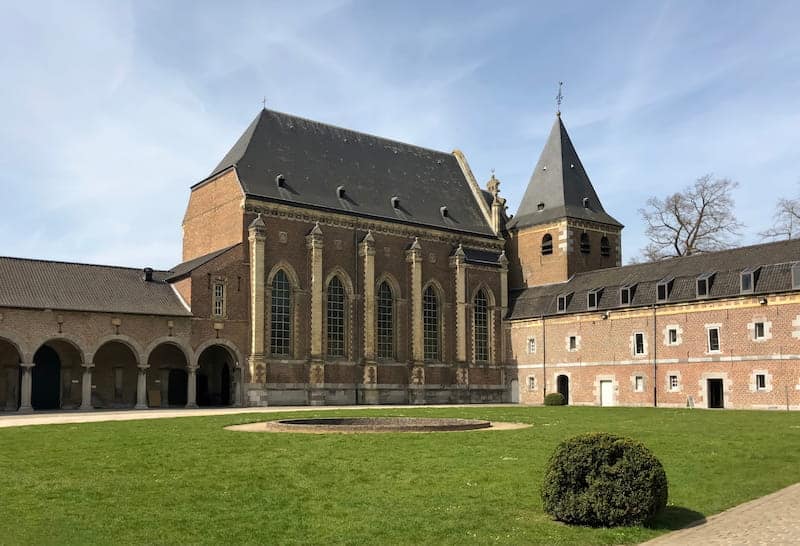
One of the romantic spots in Belgium is the Alden Biesen Castle located in Kasteelstraat, Belgium. It has a mesmerizing wide field garden filled with roses.
When visiting the castle, you’ll definitely learn about the castle’s history from their guide, explore the castle’s museum and a lot more. However, you can freely visit the castle everyday without a guide.
If you don’t have a car to go over and visit this castle, you’ll need to ride a train from the city.
practical information
🕒 Summer (April-Sept)
Weekdays: 07:00 to 21:30
Weekend & holidays : 08:00 to 21:30
Winter (October – March)
Weekdays: 07:30 to 20:00
Weekend & holidays: 10:00 to 16:00
📍 Kasteelstraat 6, 3740 Bilzen, Belgium
🐾 Limited access for pet dogs, assistance dogs are allowed
13. Wissekerke Castle
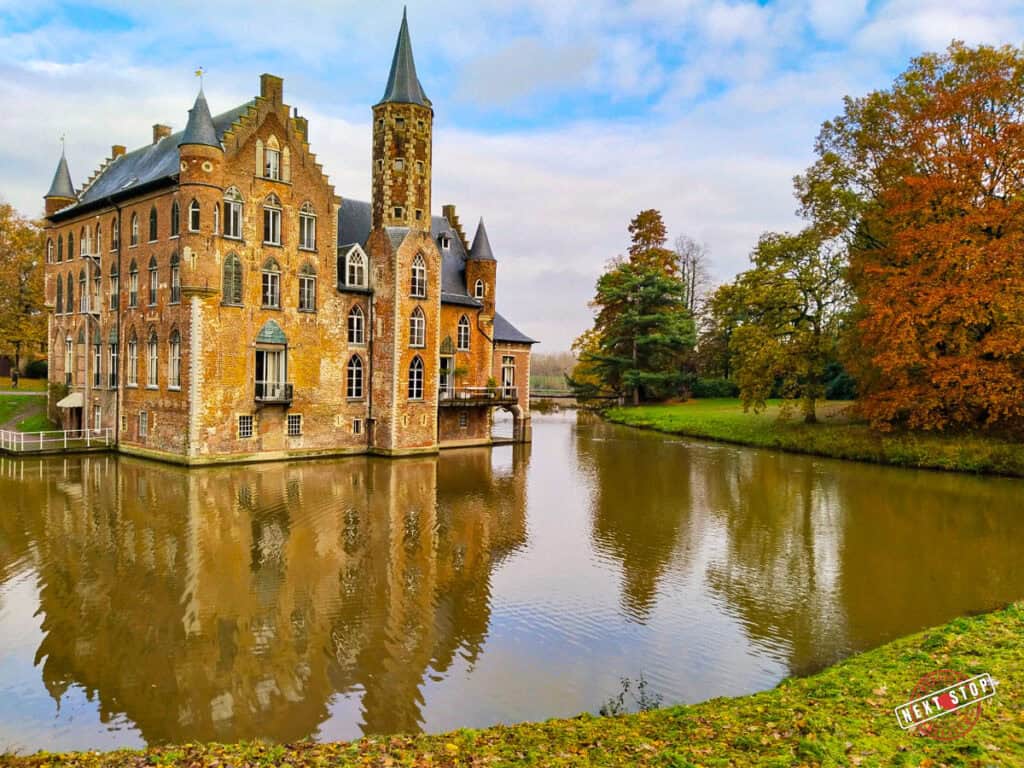
Wissekerke Castle, in Bazel, Belgium, is a notable example of neo-Gothic architecture with a history that dates back to the Middle Ages.
The castle features a moat, a unique suspension bridge, and well-maintained gardens. Inside, the rooms reflect the lifestyle of its past residents.
Today, Wissekerke Castle is a cultural site, hosting events and exhibitions. Visitors can explore the preserved rooms and learn about the castle’s history. The surrounding park offers peaceful views, making it a pleasant spot for a walk.
practical information
🕒 Opens daily from 13:00 to 17:00
📍 Kon. Astridplein 17, 9150 Kruibeke, Belgium
🎫 Standard rate €12
Seniors, students, PWD €8, primary and secondary students €5
Children under 6y free
14. Castle of Poeke
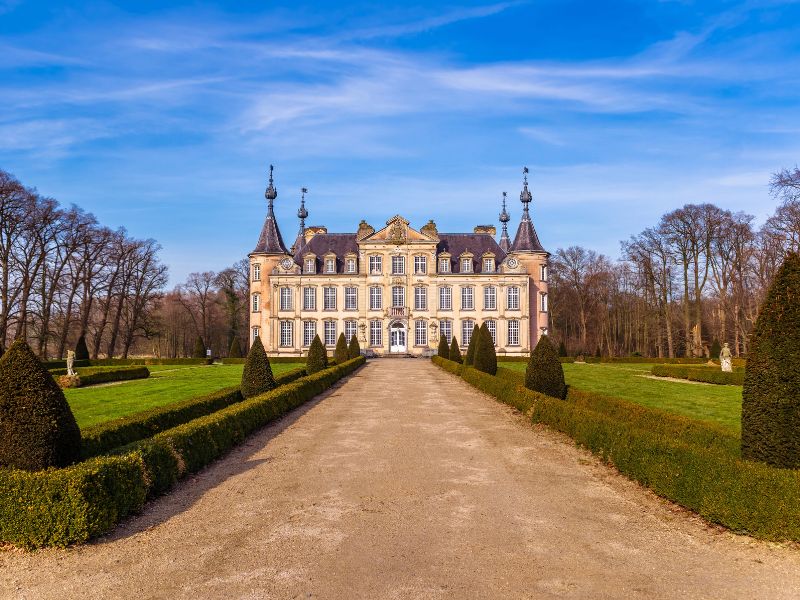
Castle of Poeke, located in East Flanders, Belgium, is an 18th-century neoclassical structure. Its origins date back to the 1139, with the current castle built on the foundations of older structures.
Over the centuries, it has been owned by various noble families who contributed to its expansion and renovation.
The castle is surrounded by a wide moat, accessible by several charming bridges. Its elegant exterior and richly decorated interior rooms reflect the tastes of the aristocracy.
Today, Castle of Poeke serves as a venue for cultural events and private functions and is owned by the municipality of Aalter.
The surrounding park, with its lakes and walking paths, is open to visitors throughout the year. Poeke Castle was designated an official national monument on October 13, 1943. In 1978, the park was recognized as a protected landscape.
practical information
🕒 Opens daily
📍 Kasteelstraat 38, 9880 Aalter, Belgium
🎫 Guided tours can be booked on the Meetjeslandsegidsen website.
🐶 Pet dogs are allowed on a leash
15. Bouchout Castle – Castle at Botanical gardens meise

Bouchout Castle, located in Meise, Belgium, dates back to the 12th century. Originally built as a medieval fortress, it has undergone several renovations and expansions over the centuries. The castle features a mix of architectural styles, reflecting its long history.
In the 19th century, Bouchout Castle was owned by Empress Charlotte of Mexico, who lived there after her return to Europe.
The castle has since been restored and preserved, maintaining its historical character. Its sturdy towers and thick walls highlight its medieval origins.
Today, Bouchout Castle is part of the National Botanic Garden of Belgium. The castle and its surrounding grounds are open to visitors, offering a glimpse into Belgium’s medieval past.
The serene setting within the botanical gardens adds to its appeal, making it a peaceful and historical destination.
practical information
🕒 Opens daily from 10:00 to 17:00
📍 1860 Meise, Belgium
🎫 Adult (18+) €11.00, Senior (65+) and PWD €10.00, Child 6-17 yo €4.00, children under 6 free
16. Château de Modave
The Château of the Counts of Marchin, also known as the Château of Modave, is located in the province of Liège, Belgium.
Built in the 17th century, it sits atop a rocky outcrop, offering stunning views of the surrounding valley. The château was originally a medieval fortress, later transformed into a grand residence by Jean-Gaspard-Ferdinand de Marchin.
The château’s interiors are richly decorated, featuring tapestries, stucco work, and period furniture. Today, the Château of Modave is open to the public as a museum.
Visitors can explore its lavish rooms and learn about its history. The surrounding park and gardens are also accessible.
practical information
🕒 Opens daily from 10:00 to 18:00
📍 Rue du Parc 4, 4577 Modave, Belgium
🎫 Adult €9.50, Senior (60+) €8.00, students €5.00, children under 12 free
🐾 Assistance dogs are allowed
⚠️ Dogs and strollers are not allowed
17. Castle Loppem
Castle Loppem, located near Bruges, Belgium, was built in the 19th century. Designed in a neo-Gothic style, the castle was commissioned by Baron Charles van Caloen and designed by architects Pugin and Béthune.
It is notable for its original architecture and well-preserved interiors, which include period furniture and art.
The castle played a significant role during World War I when it served as the headquarters for King Albert I. Its historical importance is highlighted by the king’s presence and decisions made there during the war.
Today, Castle Loppem is a museum open to the public. Visitors can explore the rooms with intricate decor, the historical art collection, and the surrounding park, which includes a unique maze.
practical information
🕒 Opens daily from 13:00 to 17:30
📍 Steenbrugsestraat 26, 8210 Zedelgem, Belgium
🎫 Adult (18+ yo) €9.00, students (6-18yo) €5.00, children under 6 free
19. Kasteel van Arenberg
Arenberg Castle, located in Leuven, Belgium, dates back to the 16th century. Originally built by the Arenberg family, the castle blends Renaissance and Gothic architectural styles. It features a distinctive red-brick exterior, large towers, and ornate details.
The castle has changed ownership several times, with significant renovations made in the 19th century. It was eventually acquired by the Catholic University of Leuven. The university has preserved the castle and its surrounding park.
Today, Arenberg Castle houses various university departments. The castle and its grounds are well-maintained and open to the public.
practical information
🕒 Opens daily
📍 Kardinaal Mercierlaan 94, 3001 Leuven, Belgium
20. Kasteel van Laarne
Kasteel van Laarne, located near Ghent, Belgium, is a medieval fortress dating back to the 11th century.
Originally built as a defensive stronghold, the castle features moats, thick walls, and medieval architecture. Over the centuries, it was transformed into a residence, blending Gothic and Renaissance elements.
The castle is known for its well-preserved interiors, including antique furniture, tapestries, and a unique collection of silverware. Presently, the castle can be booked for birthday celebrations, meetings, photoshoots, and team building.
practical information
🕒 Opens daily from 13:00 to 16:00
📍 Eekhoekstraat 5, 9270 Laarne, Belgium
🎫 Adult (+18 yo) €8.00, students (13-17yo) €6.00, children (6-12 yo) €6.00, under 5 free
🧒🏼 Tip: Book a witch hunt for your kids where they can carry a magnetic board and find the hidden witches.
21. Kasteel Cortewalle
Kasteel Cortewalle, located in Beveren, Belgium, is a Renaissance-style castle dating back to the 15th century.
Originally a medieval fortress, it was later transformed into a noble residence. The castle features a striking white façade, surrounded by a wide moat and lush parkland.
Today, Kasteel Cortewalle is owned by the municipality of Beveren and is used for cultural events and exhibitions. The castle and its park are open to the public, offering a glimpse into Belgium’s aristocratic history in a serene setting.
practical information
🕒 Opens daily from 9:00 to 17:00
📍 Zwarte Dreef 2, 9120 Beveren, Belgium
🎫 You can visit from May to September, where they offer free guided tour on one of the Sundays
Castle hotels in Belgium
Belgium has many amazing castle hotels that offer the chance to live like royalty. From impressive fortresses to cozy châteaus, there are accommodations to suit all tastes. Some even come with a real prince or princess!
So if you’re looking for an unforgettable getaway, be sure to check out our article for our picks for the best castle hotels in Belgium.
Frequently Asked Questions
BELGIUM TRAVEL PLANNING RESOURCES
Getting to Belgium: Fly into one of the main international airports: Brussels Airport (BRU) or Charleroi Brussels South Airport (CRL). Take an international train to Brussels South Station. Or take a ferry to Dover or The Netherlands, then drive or take the train to Belgium.
Getting Around: For the major destinations, the train is by far the best option. You can book your train tickets here. If you’d like to visit smaller places, the most convenient way would be to rent a car. We always use Discover cars, they compare all the rental companies and give you the best rates.
Accommodation: Booking.com is the most popular accommodation platform in Belgium. It’s what I use every single time.
Guided tours: Use Get Your Guide or Viator to find fun tours in Brussels, Bruges, Ghent and Antwerp. Or Guruwalk to find free walking tours in multiple destinations.
If this helped you plan your adventure, a coffee would go a long way in fueling my next guide! 😉
