The Complete Guide to Holidays in Belgium : National, Bank & School Holidays
This article may contain affiliate links. This means we receive a small commission whenever you book or purchase something through our links (at no extra cost to you!). You can find more information in our disclaimer.
Are you wondering what the holidays in Belgium are?
Discover the ultimate guide to Belgian National Holidays!
As a true-blue Belgian, I’ve got the inside scoop on what these holidays mean and why they matter.
If you’re planning a trip to Belgium in 2024, you won’t want to miss this.
I’ll take you on a journey from New Year’s Day to Christmas Eve, giving you the low-down on each holiday’s history, significance, and quirky traditions.
Trust me, you’ll never look at Belgium the same way again!
BELGIAN National HOLIDAY EASy-Chart
Before we begin to discuss all the Belgian National Holidays, let me give you an overview of the primary holidays celebrated in the country:
Primary Belgian National Holidays
| New Years Day | January 1st | Celebrates the beginning of the Year |
| Easter Sunday | Sunday after the Holy Week | Celebrates the resurrection of Christ after three days of death |
| Easter Monday | Monday after Easter Sunday | Monday after Easter Sunday |
| Labor Day | May 1 | Celebrates the power of the labour force |
| Ascension Day | 40 Days after Easter Sunday | Celebrates the day Jesus ascends back to heaven |
| Whit Sunday or Pentecost Sunday | 50 Days after Easter Sunday | Celebrates the remembrance of Christ’s life and legacy to strengthen the Christian faith |
| Whit Monday or Pentecost Monday | Day After Whit Sunday | A day to focus on renewal, hope, and the power of the holy spirit |
| Belgian Independence Day | July 21 | A day of national pride celebrated with cultural and traditional presentations as a commemorative celebration of the end of WWI. |
| Assumption of Mary | August 15 | celebrates the belief that Mary was assumed into heaven after her death |
| All Saint’s Day | November 1 | A remembrance of the dead loved ones and their memories |
| Armistice Day | November 11 | commemoration of the sacrifices and lives of soldiers for the Belgian Independence |
| Christmas Day | December 25 | A celebration of Jesus’ birth |
Regional Belgian Public Holiday
| Day of the Flemish Community | July 11 | Celebration of the Dutch-speaking population of the Belgian community |
| Day of the French-Speaking Community | September 27 | Celebration of the French-speaking population of the Belgian community |
| Day of the German-Speaking Community | November 15 | Celebration of the German-speaking population of the Belgian community |
Government Holidays
| All Souls day | November 2 | Honours the souls of the dead |
| Dynasty Day or King’s Feast | November 15 | A day to pay tribute to the royal family |
Working Belgian National Holidays
| Three King’s Day | January 6 | A celebration of the three kings |
| Father’s Day | Second Sunday of June / March 19th (Antwerp) | Recognition of the role of fathers in families and the community |
| Mother’s Day | Second Sunday of May / August 15th (Antwerp) | Recognition of the role of mothers in families and the community |
| Saint Nicholas Day | December 6 | A celebration of Saint Nicholas’ life and a day o sharing gifts, especially for kids |
| Valentines Day | February 14 | A celebration of love and romance |
| Administrative Professionals Day | Third Thursday of April | A day of recognizing the hard work of employees and the role that they have in strengthening the community |
| Saint Martin Day | Third Thursday of April | Marks the end of the harvest season |
School Holidays in Belgium
| Autumn Break | Late October to early November |
| Christmas Break | Mid-December to early January |
| Carnival Break | Late February to early March |
| Easter Break | Late March to Mid-April |
| Summer Break | Early July to Late August |
Belgian National Holidays 2024
From national holidays to regional festivals and government holidays, this chart will give you all the information you need to get a grasp of what is celebrated in Belgium this 2024.
I hope that with this list of Belgian National Holidays, you will have a more meaningful take on your Belgian getaway.
If you are a people person and you love the festivities and having something to do with the locals during your visit, then you should opt to visit during the peak holidays.
However, if you want to enjoy Belgium’s tranquil ambiance, then avoiding these holidays will be your best option.
Belgian National Holidays and Their Meaning
🎉 New Year’s Day
New Year’s Day in Belgium is a festive occasion celebrated on January 1st. Like in other parts of the world, this day marks the beginning of a new year.
The celebration actually starts on December 31 as the countdown begins to welcome the dawn of the incoming new year.
At 12 o’clock you will hear the start of the fireworks outside organized by the local government. On the website of every council, you can find information on where you can watch the show.
Although in other countries, private fireworks are allowed, the government does not allow this in Belgian New Year celebrations.
At midnight, the traditional way of celebrating New Year in Belgium is prompted by kissing everyone in the room on the cheek three times after the countdown to 12 midnight.
With a glass of champagne or other drink, people are expected to wish each other “Happy New Year” or Gelukkig Nieuwjaar in Flemish.
Others give their friends some best wishes which reads Beste Wensen in Flemish.

After that, kids will read their New Year’s letters to their godparents who will then reward them with money (this is the most common gift).
The festivities continue until January 1, New Year’s Day. It is customary to visit family and spend some time with them and eat together.
💡 Good to know: On New Year’s Eve, most shops close a little earlier than usual. On New Year’s Day, everything is closed.
🎉 EASTER SUNDAY
Easter Sunday in Belgium is a vibrant holiday that commemorates the resurrection of Jesus Christ.
Although some Belgians still attend the Easter Mass on this day, it has become much less of a religious celebration and more of a general celebration.
From traditional Chocolate Easter egg hunts to festive meals the Belgian Easter celebration is certainly dedicated to getting everyone involved in the festivities.
Children are told that both the Easter Bunny and the church bells bring chocolate eggs. The children are then encouraged to look for the eggs in exciting treasure egg hunts to find them.
Belgians also have other special treats with an Easter theme, such as the sweet bread Paasbrood, which is made with raisins and candied fruit.
Although not all traditions have survived, some cities and towns still hold Easter festivals, such as the one in Chièvres, which features a procession of the “living cross” through the streets.
💡 Good to know: As Easter is traditionally celebrated on a Sunday, most shops are closed during this day.
🎉 Easter Monday
Easter Monday in Belgium is an official day off but not much is done during that day.
As it is a day off, many Belgians choose to spend it either at home or go on a family trip. However, there are no particular celebrations for this day.
💡 Good to know: On Easter Monday, everything is closed.
🎉 Labor Day
May 1st is celebrated as Labor Day, International Workers’ Day, or First of May Day.
Since 1890, Belgians have been celebrating this public holiday as a day to acknowledge and celebrate the contributions of workers to the Belgian economy.
Labour unions, political parties, and organizations come together to promote workers’ rights, better working conditions, and fair wages through a variety of activities.
Labor Day is a day to witness the solidarity of workers in action and to reflect on the rich history and legacy of workers’ movements.
However, Belgians who are not part of any labor union, often just enjoy a calm day off at home.
💡 Good to know: On Labor Day, everything is closed. But you will find many Belgians enjoying a BBQ with friends or family.
🎉 Ascension Day
Ascension Day is a Christian holiday that occurs 40 days after Easter Sunday. It commemorates Jesus Christ’s ascension into heaven, according to Christian belief.
As a public holiday, it is a day off for the general population, and schools and most businesses are closed.
This day always falls on a Thursday, so many people make ‘the bridge’ by taking the day off on Friday. Most public services consider both days as holidays automatically.
In Belgium, there are various traditional events held to celebrate an occasion, such as The ‘In Flanders Fields March‘, also known as the 100 km of Ieper (Ypres).
Which is an international three-day hike that takes place every year during the Ascension Day weekend in and around the city of West-Flanders.
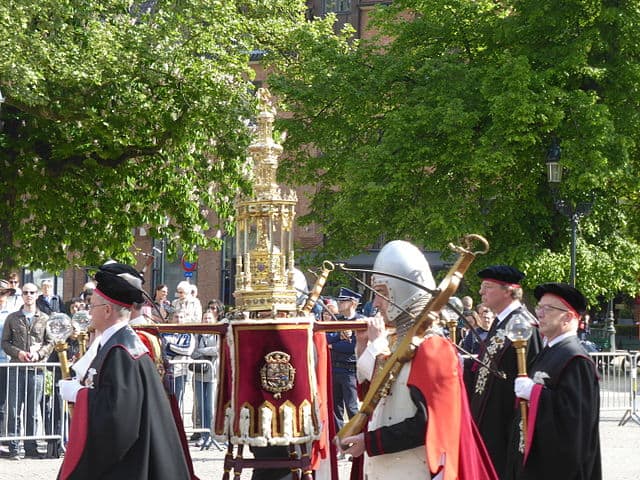
Another tradition is the yearly procession of the Holy Blood in the Flemish city of Bruges.
During this procession, the relic of the Holy Blood is carried through the city centre of Bruges. The procession has been inscribed on the UNESCO list of Intangible Cultural World Heritage Sites since 2009.
💡 Good to know: This holiday is the start of a long weekend. So many public services will be closed for the entire weekend (such as banks and post offices).
🎉 Whit Sunday or Pentecost Sunday
Pentecost, also known as Whit Sunday, is a Christian holiday that celebrates the arrival of the Holy Ghost upon Jesus Christ’s disciples, as narrated in the New Testament of the Bible.
On this day, the general population has a day off from work and school, and most businesses and institutions are closed due to the public holiday.
🎉 Whit Monday or Pentecost Monday
Whit Monday is a public holiday celebrated in Belgium on the day after Whit Sunday.
In some parts of Belgium, such as Gerpinnes near Charleroi, large processions are held in honor of Sainte Rolende de Gerpinnes, a centuries-old tradition.
For most Belgian families, this is the time to spend time with friends or family and share BBQ get-togethers outdoors.
Whit Monday is a bank holiday, which means most public services and shops will be closed.
🎉 Belgian Independence Day
Every year on July 21, Belgium celebrates its Independence Day. This is the day King Leopold I was made king in 1831. This also marks when Belgium became its own country and not part of the Netherlands anymore.
It is a day of national pride, with citizens decorating their homes and businesses with patriotic colors of black, yellow, and red.
This is also the time when the Royal Family attends a Te Deum service at the Cathedral of St. Michael and St. Gudula in Brussels.
During this time, Festivals and fairs take place throughout the country. The biggest bash goes down in Brussels, where a military parade is held in front of the Royal Palace and followed by fireworks in the evening.
💡 Good to know: If you are traveling to Belgium with the goal of immersing in its history and culture, this is probably the best time to visit.
🎉 Assumption of Mary
In Belgium, August 15th marks an important Christian holiday known as the Assumption of Mary.
It honors the belief that Mary was taken up to heaven, both in body and soul, following the end of her life on earth.
Most businesses are closed that day because this is a public holiday.

🎉 All Saint’s Day
On November 1st, Belgium celebrates All Saint’s Day, along with the rest of the world.
This occasion is a significant public holiday that commemorates the lives of all the saints and martyrs who have passed on and are believed to have gone to heaven.
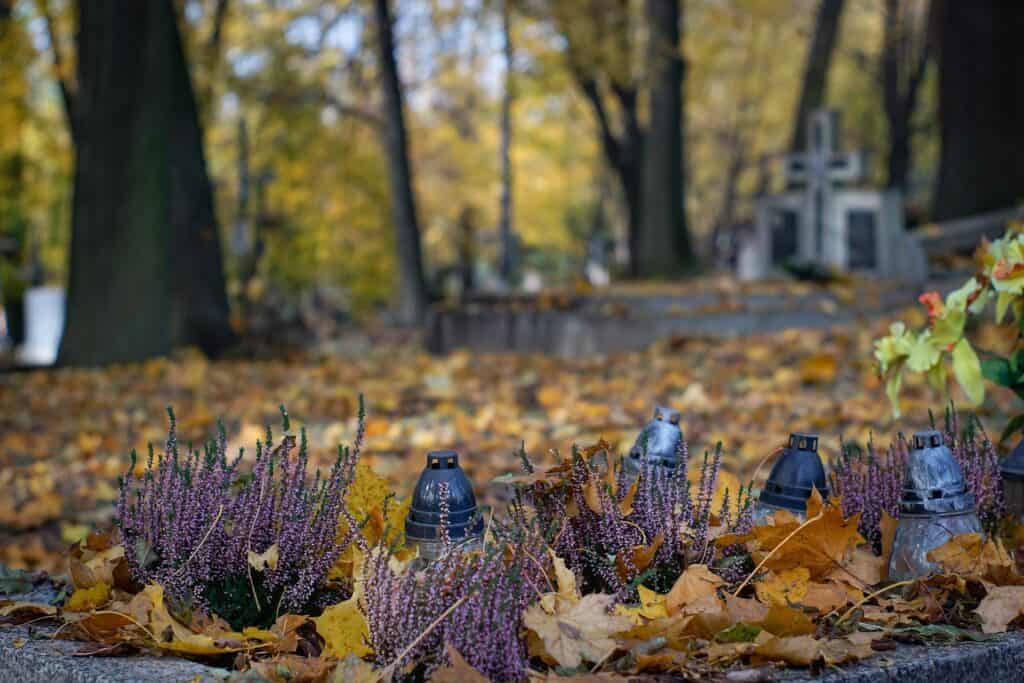
This day is about remembering the deceased. It is a time for visiting cemeteries and leaving flowers on the graves of loved ones.
The most common flower to buy on that day will be Chrysanthemums. You can find people who sell them at gas stations or at the cemetery itself.
💡 Good to know: On November 2nd, All Souls’ Day follows All Saints’ Day. This day is observed in remembrance of the souls of all the departed Christians.
🎉 Armistice Day
November 11th marks Armistice Day in Belgium. It was a time for the nation to pay tribute to the soldiers who made the ultimate sacrifice during World War I.
The day is marked by ceremonies, parades, and the laying of wreaths at war memorials. In Ypres, there will be a special Last Post at the Menin Gate at 11 A.M.
The King of Belgium (King Filip) typically attends the military ceremony to place a wreath honoring the fallen soldiers at the foot of the tomb of the Unknown Soldier.
Initially, the Belgian government set August 4th to commemorate the end of World War I, but in 1922, the date was changed to November 11th.
🎉 Christmas Day
Belgium celebrates Christmas with a mix of traditions and festivities. To welcome the celebrations, Christmas markets pop up throughout the country in the weeks leading up to December 25th.
This offers an opportunity for the locals and visitors to shop for presents, decorations, and seasonal food and drink.
Families typically come together for a big meal on Christmas Eve, which includes traditional dishes like mashed potatoes and often features turkey (but not as significant as it is in American culture) or another type of roast.
While a chocolate Christmas log cake, known as Kerststronk or la buche de Noel, is a popular dessert. I can speak from experience that there always seems to be an excessive amount of food that must be consumed.
Gifts are also exchanged under the Christmas tree during this time.
💡 Good to know: Christmas decorations and Christmas songs will be all around you, so it’s hard not to be sucked in to the Christmas Spirit.
Regional Belgian Public Holidays
✨ Day of the Flemish Community
The Day of the Flemish Community is a regional public holiday celebrated on July 11th in Belgium. This celebration commemorates the official recognition of the Flemish Community as an autonomous region with its own government and parliament.
The day also marks the anniversary of the Battle of the Golden Spurs in 1302.
The Flemish Community is comprised of Dutch-speaking Belgians residing in the Flemish Region, representing about 60% of the total population of Belgium.
The day is celebrated in style with parades, concerts, folk dances, exhibitions, and performances promoting Flemish language and culture.
It’s a time to celebrate the Flemish people’s contributions to Belgium’s rich heritage and highlight the country’s linguistic and cultural diversity.
The Day of the Flemish Community Festival takes place at the Grand Palace and the Place de la Monnaie in Brussels, featuring cultural performances, food, and drinks that attract many people from the Flemish community.
💡 Good to know: During this time, free food, free concerts, and other events are open for the public to enjoy. Visiting the country this time will certainly give you a unique and authentic experience of Belgian culture.
✨ Day of the French-Speaking Community
September 27th is an important day in Belgium as it marks the Day of the French-Speaking Community. This regional public holiday recognizes the French language as one of Belgium’s official tongues and celebrates the French-speaking population of the country.
The holiday is marked by a plethora of cultural and artistic events such as concerts, exhibitions, and theater performances, showcasing the vibrant creativity and talent of French-speaking Belgians.
The day is also celebrated with parades, festivals, and fireworks displays across the French-speaking region of Belgium, bringing people together to celebrate their culture and heritage.
The Day of the French-Speaking Community is an opportunity to show love and appreciation for the contributions of the French-speaking population to the arts, culture, and society of Belgium, and to embrace the country’s rich linguistic and cultural diversity.
💡 Good to know: Love French? Then this is the best day to go visit Belgium.
✨ Day of the German-Speaking Community
The Day of the German-Speaking Community is an annual regional public holiday celebrated on November 15th in Belgium.
The holiday is dedicated to honoring the cultural identity and contributions of the German-speaking population of Belgium, particularly in the communes of the province of Liège and the German-speaking area.
The day is marked by a variety of celebrations, including traditional music and dance performances, local cuisine, and more, providing a platform to showcase the rich cultural heritage of the German-speaking community in Belgium.
It’s a day to come together and honor the traditions, customs, and history that have been passed down from generation to generation.
💡 Good to know: The mix of German culture with Belgian traditions creates a great representation of how diversified and rich the culture of the people in Belgium is. If you want to witness this diversity, then this is the best time to visit the country.
Government Holidays
🎊 All Souls
On November 2nd, Belgians celebrate All Souls Day, also known as Dia de los Muertos, which is a public holiday dedicated to honoring the souls of loved ones who have passed away.
All Souls Day has roots in the Catholic tradition and is celebrated globally, but in Belgium, it holds great significance as a day to come together, visit cemeteries, light candles, and bring flowers to the graves of loved ones.
The day is a beautiful way to pay respects and reflect on cherished memories of those who have gone before us.
In Belgium, it is customary to decorate loved ones’ graves with chrysanthemums during All Souls Day.
🎊 Dynasty Day or King’s Feast
On November 15th, Belgium celebrates Dynasty Day, also known as the King’s Feast or Fête de la Dynastie. This national holiday pays tribute to the royal family and their contributions to the country’s rich cultural heritage.
The day is marked by parades, festivals, and ceremonies in honor of the monarchy, with the main celebrations taking place in Brussels.
Since 2001, the Belgian Federal Parliament holds a ceremony in honor of the king, with members of the royal family and other dignitaries in attendance.
The day also recognizes the philanthropic work and efforts to promote peace and stability by the royal family both at home and abroad.
This holiday has been celebrated since 1866, and from 1909 to 1912, it was celebrated on November 26th, which is St. Albert’s Day, to mark the name of the monarch currently on the throne, King Albert I.
💡 Good to know: If you want to feel like royalty and have a glimpse of the royal family, make sure to check which local events they would be attending during this day.
While you are loving the holidays in Belgium, you can check out some of the exciting activities you can do during your visit.
Working Holidays
📣 Epiphany/Three Kings’ Day
On January 6th, Belgium celebrates Epiphany, or Three Kings’ Day, a public holiday that involves unique traditions. Although businesses and government offices remain open, Belgians still have a great time.
One of the main traditions is the “galette des rois” or “Kings’ cake,” which contains a small figurine or bean. The person who finds it in their slice is crowned king or queen for the day.
Children also participate in “star singing,” where they go from door to door singing songs and reciting poems in exchange for candy or small gifts, symbolizing the journey of the Magi.
Additionally, different regions have their own unique traditions. For instance, some children put out grass and water for the animals who accompanied the three kings, and Hispanic families in Belgium celebrate with a delicious dinner and Kings’ Bread (Rosca de Reyes) for dessert.
📣 Father’s Day
Father’s Day is a special day celebrated in many countries, including Belgium. This day aims to show appreciation for fathers and father figures.
In Belgium, Father’s Day is celebrated on the second Sunday of June, and it has quickly become a popular way to honor the important role that fathers play in our lives.
On this day, kids get creative, crafting gifts and cards to show their appreciation, while families come together for a special meal or a day out. Gift-giving is a common tradition, and children often make homemade items for their fathers, while purchasing unique gifts.
Additionally, families often have picnics or barbecues, providing an opportunity for quality time and outdoor activities. Even though it’s a relatively new tradition in Belgium, Father’s Day has quickly become an important day to honor and celebrate the amazing dads out there.
💡 Good to know: Often, there are promotions and discounts for visitors who come to the country to celebrate Father’s Day to make this day extra special for the family’s head.
Mother’s Day
Mother’s Day is a special occasion in Belgium, observed every year on the second Sunday of May. It’s a time to show gratitude and appreciation to all the hardworking and nurturing mothers and mother figures out there.
Although it’s a working holiday, families take the time to pamper and spoil their mothers with gifts, flowers, and special meals.
In Belgium, one common tradition is to present mothers with medals on Mother’s Day, while others may give special flower bouquets and cakes.
It’s also a day to recognize and honor the powerful and irreplaceable role that all mothers play in our lives and in society, as they are the heart and soul of our families, providing endless love, care, and support.
💡 Good to know: Like on Father’s Day, be aware of the Mother’s Day special offers in shops and accommodations to get the best out of your visit to Belgium during this day.
📣 Saint Nicholas Day
Saint Nicholas Day is a beloved holiday in Belgium celebrated on December 6th. This day commemorates the life of Saint Nicholas, a legendary Christian saint known for his kindness and generosity towards the poor and needy.
The day is marked by a variety of fun-filled traditions such as colorful parades, processions, and giving small gifts and treats to children.
Kids leave out their shoes, stockings, or plates in hopes of a special delivery from Saint Nicholas, filled with candy, chocolate coins, oranges, or even small presents under their pillows.
Families gather to sing songs, exchange gifts, and nibble on delicious cookies, particularly the famous spiced shortbread cookie or biscuit called “speculoos” or “speculaas”.
These treats represent St. Nicholas’s legendary rescue of three impoverished girls by paying their marriage dowries with gold. Saint Nicholas himself makes an appearance at the parades and processions to high-five kids and gives out presents, adding to the joyful atmosphere of this wild and wonderful holiday.
💡 Good to know: This holiday most often than not focuses on the children. Be sure to get gifts for children in case you plan to visit friends and family in Belgium during this day.
📣 Valentines Day
Valentine’s Day in Belgium is a day for love and romance, celebrated on February 14th each year. Belgians exchange cards, flowers, and chocolates, while some even take romantic getaways to cozy chalets in the Ardennes.
The day is not just for couples – single people can also enjoy the day with friends, exchanging gifts and sweet treats, or having a “Galentine’s” Day celebration.
This popular tradition also includes having a romantic lunch, or dinner in a restaurant, many of which even have a Valentine’s Menu. Lots of shops and bakeries will be ornated with hearts and red colors.

💡 Good to know: Get restaurant reservations at least four days before Valentine’s celebration to secure a special space and get the best deals for your celebration.
📣 Administrative Professionals’ Day
Administrative Professionals’ Day, also known as Secretaries Day, is celebrated in Belgium on the third Thursday of April to recognize and appreciate the hard work and contributions of administrative professionals in the workplace.
These unsung heroes play a vital role in ensuring that the workplace runs smoothly by managing paperwork, scheduling appointments, and performing other important tasks.
Belgian businesses and organizations use this day to show their gratitude to their administrative professionals through various means such as giving cards, flowers, chocolates, lunches, and even devoting an entire week to celebrating their invaluable staff.
Administrative Professionals’ Day highlights the power of teamwork and the importance of recognizing and valuing every individual’s contribution to making things happen in the workplace.
💡 Good to know: There are also a series of job sprees during this day. If you are looking to search for a job to settle in Belgium, this day may be a good day for you to visit.
📣 Saint Martin
In Belgium, November 11th is a day to celebrate the whimsical holiday of Sint Maarten, also known as Martinmas, which marks the end of the harvest season. This feast isn’t famous in all of Belgium and is mostly celebrated in West Flanders and around Ypres.
Children roam the streets with their handmade lanterns, singing sweet songs and collecting candy in exchange, while families enjoy delicious traditional treats such as speculoos cookies and hot chocolate.
In addition to the lantern processions, Belgians also feast on Martinmas goose or beef and drink the first wine of the season.
In some parts of Belgium, such as Eastern Flanders, St. Martin’s Day is celebrated similarly to Christmas, with the saint bringing sweets and presents in the middle of the night between November 10th and 11th.
Another tradition is the horseshoe-shaped cake; while in the past, fires were lit to celebrate and give thanks for the end of the harvest. Sint Maarten Day is all about coming together as a community, enjoying good food, and having fun, while also honoring the traditions and cultural significance of this festive holiday.

💡 Good to know: As festive as this celebration is, it is best to come to the country during this time if you want to feel the family culture in the community.
Bank Holidays in Belgium
Bank holidays in Belgium are anything but boring! From festive meals on New Year’s Day to family gatherings and light displays on Christmas Day, these holidays offer a chance to experience the country’s rich culture and traditions.
Here’s a list of all the bank holidays in Belgium:
- New Year’s Day (January 1)
- Easter Monday (April 18)
- Labor Day (May 1)
- Ascension Day (May 26)
- Whit Monday (June 6)
- Belgian National Holiday/Belgian Independence Day (July 21)
- Assumption of Mary (August 15)
- All Saint’s Day (November 1)
- Armistice Day (November 11)
- Christmas Day (December 25)
- Day of the Flemish Community (July 11)
- Day of the French-Speaking Community (September 27)
- Day of the German-Speaking Community (November 15)
Religious bank holidays like Easter Sunday and Pentecost Sunday and Monday are celebrated with great enthusiasm throughout the country. From colorful processions to joyous celebrations, you’ll get to witness firsthand the unique ways Belgians honor these special days. Don your Sunday best, and join in on the spiritual festivities!
During your stay in Belgium, make sure to check out some of the best places to visit around the country.
School Holidays in Belgium
🎒 School Holidays for the Flemish
School’s out, it’s time to shout! Flemish families, these are the five epic school holiday periods throughout the year! These periods include:
- Autumn break (late October and early November)
- Christmas break (mid-December to early January)
- Carnival break (late February or early March)
- Easter break (late March to mid-April)
- Summer break (early July to late August)
But what to do during these breaks, you ask? Time to get excited, people!
The autumn break is all about getting lost in the country’s charming history, while the Christmas break brings out the child in all of us with its festive markets and twinkling lights. Carnival break is the perfect time to let your hair down and dance to the rhythm of the lively parades, and Easter break is a heavenly time for chocolate lovers and religious observers alike. And of course, the summer break is the ultimate time to explore Belgium’s stunning nature and take part in some epic festivals.
🎒 School Holidays for the Walloons
Attention all Walloons, it’s time to get your holiday groove on! These six school holiday periods are where the real fun is at:
- Autumn break (late October and early November)
- Christmas break (mid-December to early January)
- Carnival break (late February or early March)
- Spring break (early April)
- Ascension break (late May)
- Summer break (early July to late August)
Make some unforgettable memories as the autumn break is perfect for exploring the stunning fall foliage and discovering the rich history of Wallonia.
The Christmas break is a time for warm hugs and delicious treats at the holiday markets. Carnival break is all about the vibrant parades and parties that bring the region to life, while spring break is a time to dust off your hiking boots and get lost in the stunning countryside.
The Ascension break offers a chance to reflect on the spiritual significance of the holiday, while the summer break is the ultimate time to get outdoors and soak up the sunshine. So, Walloons, let’s make these school holiday periods the most epic yet!
Fun Facts About Belgian Holidays
In this section, I want to share five fun facts about Belgian holidays that are sure to spark your curiosity and leave you eager to learn more!

✔️ Belgians love their chocolate, and it’s no surprise that chocolate Easter eggs are a big deal during Easter. In fact, Belgians consume an average of 10 kilograms of chocolate per person per year!
✔️ The annual Carnival of Binche is a colorful and lively festival where participants wear creepy masks made of wax and ostrich feathers. Legend has it that the masks help ward off evil spirits!
✔️ During the Ghent Festival Gentse Feesten, a giant omelet made with over 10,000 eggs is cooked up in a massive frying pan, and locals are invited to dig in and enjoy.
✔️ Belgians are serious about their waffles, and there’s even a day dedicated to them! March 25th is National Waffle Day in Belgium, so make sure to enjoy the sweet treat on that day.
✔️ In some regions of Belgium, it’s customary to celebrate Epiphany by throwing tangerines at family members. The tradition is meant to bring good luck and ward off evil spirits, so be prepared to duck and weave!
🛏️ If you are looking for a place to stay during your Belgian vacation, here are some accommodation considerations you need to check to ensure a relaxing and comfortable visit.
Frequently asked questions
What is the biggest holiday in Belgium?
Belgium’s National Holiday on July 21st is like the country’s birthday party.
This holiday celebrates the country’s independence from the Netherlands in 1831. There’s flag-waving, fireworks, and plenty of fun for all.
How many public holidays does Belgium have?
Belgium has 11 public holidays each year! That’s a whole lot of time to celebrate, relax, and get your party on.
What is the biggest holiday in Belgium?
Belgium’s National Holiday on July 21st is like the country’s birthday party. This holiday celebrates the country’s independence from the Netherlands in 1831. There’s flag-waving, fireworks, and plenty of fun for all.
Do they celebrate Christmas in Belgium?
Yes, you bet they do! Belgians go all-out during the festive season with plenty of gift-giving, twinkling lights, and awe-inspiring decorations.
Is Christmas in Belgium big?
Belgians do it big, of course! Families gather together, feast on delicious food, and exchange presents, while the whole country sparkles with holiday magic.
Are public holidays paid in Belgium?
If you work in Belgium, it is worth knowing that public holidays in Belgium are paid, so you can enjoy the festivities without worrying about your bank account.
Employees who work on a public holiday are usually entitled to premium pay or an additional day off in lieu of the holiday.
Just make sure you check the rules and requirements for your industry to get the most out of your time off.
Wrapping Up: Belgian National Holidays
Experience the magic of Belgium’s national holidays, where you’ll discover the country’s rich culture and traditions in all its glory. From the heart-pumping excitement of Belgian Independence Day to the peaceful ambiance of All Saints’ Day, there’s a holiday to suit all tastes. Going around in the n Belgium is also made easier by easy-access transportation that will suit your every need.
And whether you’re eager to explore the country’s captivating history or just want to indulge in its delicious food and drink, these festive occasions are sure to bring people together in a jubilant celebration of all things Belgian.
This guide has given you a mere taste of the incredible moments that Belgian national holidays have to offer. But why stop there?
Dive in and uncover the spectacular experiences that await you, let the magic of these amazing holidays enchant you, and discover why Belgium is a country that truly has it all!
BELGIUM TRAVEL PLANNING RESOURCES
Getting to Belgium: Fly into one of the main international airports: Brussels Airport (BRU) or Charleroi Brussels South Airport (CRL). Take an international train to Brussels South Station. Or take a ferry to Dover or The Netherlands, then drive or take the train to Belgium.
Getting Around: For the major destinations, the train is by far the best option. You can book your train tickets here. If you’d like to visit smaller places, the most convenient way would be to rent a car. We always use Discover cars, they compare all the rental companies and give you the best rates.
Accommodation: Booking.com is the most popular accommodation platform in Belgium. It’s what I use every single time.
Guided tours: Use Get Your Guide or Viator to find fun tours in Brussels, Bruges, Ghent and Antwerp. Or Guruwalk to find free walking tours in multiple destinations.
If this helped you plan your adventure, a coffee would go a long way in fueling my next guide! 😉
