How to Experience Carnaval in Belgium Like a Local
This article may contain affiliate links. This means we receive a small commission whenever you book or purchase something through our links (at no extra cost to you!). You can find more information in our disclaimer.
Carnaval in Belgium: where should you experience this vibrant tradition?
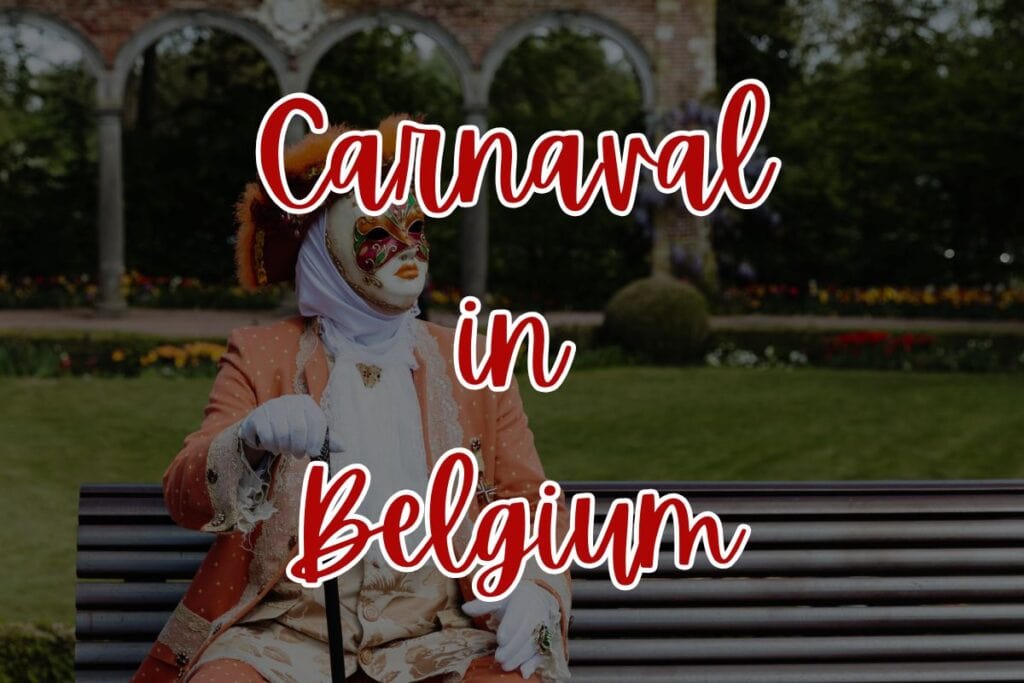
In Belgium, Carnaval isn’t just a party—it’s a fusion of deep-rooted traditions, elaborate costumes, folklore, and straight-up fun that rolls across the country from early January to Lent.
But depending on where you are, it can feel like a completely different celebration.
In Flanders up north, you’ll find vibrant parades, marching bands, and a focus on creativity, community, and satire.
But in Wallonia down south, the atmosphere shifts. Costumes carry meaning, masks are passed down through generations, and some characters are so iconic they’re protected by UNESCO.
And in many towns, Carnaval isn’t something you simply attend—it’s something you belong to.
Most visitors only catch the big names: Binche and Aalst. But if you’re traveling by train, you’ve got access to dozens of local celebrations across the country, each with its own style, pace, and history.
That’s part of the magic: no two Carnavals are the same.
Some towns go all-in with humor, others lean into centuries-old customs. And then there’s Ronse, where I live, quietly kicking off the whole season with the Bommelsfeesten, Belgium’s very first Carnaval of the year.
If you’ve never experienced Carnaval here, you’re in for a surprise.
If you’re into traditional folklore, chaotic confetti storms, or just want an excuse to wear a ridiculous costume in public (no judgment!), there’s a Carnaval for you somewhere in Belgium.
Bommelsfeesten in Ronse
Belgium’s First Carnaval of the Season
Before the Gilles of Binche wear their feathered hats or the Blancs Moussis flood the streets of Stavelot with confetti, Carnaval season in Belgium begins in Ronse.
Located in the Flemish Ardennes, this small city hosts the country’s first Carnaval celebration of the year: the Bommelsfeesten, held every January.
The Bommelsfeesten is deeply rooted in the city’s identity, with a tradition that stretches back over 150 years. While it’s not as famous as Binche or Aalst, locals here wouldn’t trade it for anything.
The word “Bommel” originally referred to the costume wearers: masked and mysterious figures that would roam the streets of Ronse during the festival.
Over time, the term came to represent the entire event. These days, the Saturday night parade is the highlight: dozens of floats roll through the city center, decked out in glowing lights and blasting music.
Locals line the streets, bundled up in scarves and beanies, tossing streamers and dancing with their neighbors.
There’s also a children’s parade on Saturday morning, plus fireworks, parties, and exhibitions leading up to the weekend.
Practical Info:
- When: Usually the second weekend of January
- Where: Ronse city center (East Flanders)
- Getting there: Easy train ride from Ghent or Brussels, with evening return options (but better to stay overnight)
- Tip: Book early, local B&Bs fill up fast!
Carnaval in Flanders
Parades, Parties, and Plenty of Personality
If Wallonia is where Carnaval clings to its folkloric past, Flanders is where it struts into the street with confetti cannons, brass bands, and hand-built floats that make you laugh out loud.
The vibe in northern Belgium is bold, colorful, and often playfully irreverent. While tradition plays a role, especially in long-standing celebrations, Flemish Carnaval leans into spectacle and satire.
That’s not to say it’s all just fun and games; these events are months in the making, powered by tight-knit local groups who pour their creativity into elaborate costumes and parade floats.
And if you’re traveling through Flanders by train between February and early March, odds are you’ll land in a town that’s mid-festival.
Aalst Carnaval: Famous, Infamous, and Unforgettable
The biggest and most notorious of them all is Aalst Carnaval.
It’s been recognized by UNESCO, unrecognized by UNESCO, and stirred more than its fair share of controversy over the years, but it remains one of the most iconic Carnaval events in the country.
Over three days, Aalst transforms into a surreal, no-holds-barred city of satire.
Expect massive floats poking fun at politics and pop culture, marching groups dressed in themed costumes (many made by hand), and locals who live for this weekend.
The tradition of the Voil Jeanetten, men dressing as ragged old ladies on Sunday, adds a unique local twist.
Aalst’s sense of humor isn’t for everyone, but it’s undeniably a core part of the city’s identity.
Small Towns and Big Celebrations
Not every Flemish Carnaval is as wild as Aalst. Some towns keep things more family-friendly, with afternoon parades, music, and activities geared toward kids.
- Tienen (in Flemish Brabant) hosts a classic Carnaval parade that’s especially welcoming for families, with a festive but laid-back feel.
- Maldegem, in East Flanders, organizes a well-loved Carnaval parade with strong local participation and a great community vibe.
These smaller celebrations offer a more relaxed experience without sacrificing charm. You’ll still see colorful costumes, quirky themes, and people of all ages lining the streets with candy bags and party horns.
What Makes Flemish Carnaval Stand Out?
- Satire: Parades often poke fun at politics, celebrities, or local gossip.
- Parade floats: Many towns build floats entirely from scratch each year.
- Music and atmosphere: Marching bands and DJ trucks set the tone.
- Accessibility: Most events are easily reachable by train—no car needed.
Flemish Carnaval may not come with UNESCO costumes or ancient folklore, but it’s deeply local, loud, and proudly over the top. For visitors, it’s a high-energy way to jump into Belgian culture, confetti and all.
Carnaval in Wallonia
Where Folklore and Festivity Meet
Carnaval in Wallonia is less about glitz and more about roots. It’s where tradition isn’t just remembered, but also performed, year after year, by entire communities that treat it as both celebration and responsibility.
If Flanders throws a party, Wallonia tells a story and every costume, mask, and drumbeat has a part in it.
These aren’t your average parades. Many of Wallonia’s most famous Carnavals are classified as intangible cultural heritage, some even recognized by UNESCO.
The energy is different here: slower at times, but more symbolic, ritualized, and immersive.
And for travelers, it’s like stepping into living history including a few thousand oranges flying through the air.
Let’s start with the one that’s earned worldwide attention.
Binche: Home of the Gilles
If there’s one Carnaval that defines Wallonia, it’s Binche.
Every year, in the days leading up to Lent, this small town near Mons becomes the stage for a tradition that goes back centuries.
The stars of the show are the Gilles: men and boys from Binche who don wax masks, wooden clogs, and elaborate ostrich-feather hats to dance through the streets on Mardi Gras.
The Gilles don’t just look impressive, they carry a powerful cultural role.
Their choreography is exact, their movements are symbolic, and their costumes must be handmade and rented from local ateliers.
No one can just become a Gille; you have to be born in Binche or have deep roots there.
The climax: the Gilles hurl oranges into the crowd as a gesture of luck and abundance. Try to catch one, but don’t throw it back; it’s considered bad form and bad luck.
Practical Info:
- When: Three days before Ash Wednesday (main event on Mardi Gras)
- Getting there: Direct trains from Brussels to Binche
Stavelot: The Chaos of the Blancs Moussis
Head east to Stavelot and you’ll find one of Belgium’s most visually striking Carnaval characters: the Blancs Moussis.
These figures, dressed in all white with long red noses and a tendency to cause low-key mayhem, take over the town in a flurry of confetti and satire.
The origin goes back to a medieval church ban on clergy participating in Carnaval.
Locals protested by dressing as white-clad monks with exaggerated noses—humorous, defiant, and now completely iconic.
Today, they ride floats, sneak through the crowds, and stuff confetti into the shirts and pockets of just about everyone they pass. Good luck staying clean!
Practical Info:
- When: Sunday before Ash Wednesday
- Atmosphere: Festive and a bit chaotic—great for kids, but maybe wear goggles!
Malmedy: Medieval Meets Mischievous
A few kilometers from Stavelot, Malmedy offers another unforgettable Carnaval tradition: the Haguètes.
These masked figures in velvet robes carry wooden tongs to “capture” people in the crowd—mostly playfully, sometimes aggressively.
Don’t worry, it’s all part of the show!
The Carnaval de Malmedy has been around since the 15th century and features some of the oldest continuous Carnaval rituals in Belgium.
The parades stretch across multiple days and include dozens of traditional characters, some unique to Malmedy and known only to locals.
It’s both theatrical and deeply communal. Families pass down character roles. Costumes are crafted with care. And the entire city center transforms into a carnival of color, music, and carefully choreographed anarchy.
Practical Info:
- When: Four days ending on Mardi Gras
- Tip: Arrive early—Malmedy gets packed!
Other Hidden Gems in Wallonia
Don’t stop with the big three. Wallonia is full of Carnaval towns, each with its own twist:
- Fosses-la-Ville: Famous for the Chinels, dancers in ornate red-and-gold costumes that mock Napoleonic officers
- La Louvière: Known for its giant puppets and lively parades
- Ath and Marche-en-Famenne: Hold unique processions blending pre-Christian traditions with Christian symbolism
Many towns have Carnavals de Laetare (mid-Lent Carnavals), giving you a second chance to catch the festivities if you miss February.
Travel tip: Most major Walloon Carnavals are accessible by train. In fact, the National Railway Company of Belgium (or SNCB) promotes Carnaval travel routes each year, often with discounts or combo deals. It’s one of the easiest and most sustainable ways to experience multiple Carnavals without a car.
Why You Should Visit During Carnaval
Belgium in winter might not sound like a party destination, but if you time your trip around Carnaval, you’re in for something way more memorable than a waffle and a walk through Grand Place.
Carnaval is one of the few times of year when even the sleepiest towns throw open their doors, crank up the brass bands, and invite everyone, locals, visitors, and total strangers, to join in.
For travelers, it’s the perfect kind of culture shock: immersive, unpredictable, and full of moments you couldn’t plan even if you tried.
One minute you’re watching a centuries-old dance with wooden clogs and bells, the next you’re dodging oranges or getting ambushed by a confetti-slinging monk with a fake nose.
It’s also a rare chance to see Belgian towns in their full glory.
You won’t find these characters or traditions in a museum. They only exist in motion, passed down and brought to life for a few days a year. And the best part is you don’t need to understand everything to enjoy it!
Whether you’re into street parades, historical reenactments, offbeat humor, or just want to see what happens when a whole town decides to dress up and let loose, Carnaval has a version of that.
And since so many of these celebrations are reachable by train, you can hop between cities without much planning.
Belgium does many things well but during Carnaval, it absolutely outdoes itself.
Planning Your Carnaval Adventure
If this is your first Carnaval in Belgium, here’s the good news: you don’t need to be an expert. But a little planning will go a long way, especially since some of these celebrations attract serious crowds and only happen once a year.
Here’s how to make the most of it.
Timing Your Trip
Carnaval events typically run from early January to early March, depending on where you go.
- Ronse (Bommelsfeesten): Early January
- Binche, Aalst, Malmedy, Stavelot: Around the weekend before Lent (Mardi Gras)
- Laetare Carnavals: Mid-Lent, roughly three weeks after Mardi Gras
Check exact dates each year, they shift with the liturgical calendar.
Where to Stay
For major events like Binche and Malmedy, book accommodation early; like, months early if you want to stay in the town itself. In smaller towns, local B&Bs and guesthouses often fill up with regulars who return every year.
Don’t mind a short train ride? You can also stay in a nearby city (e.g. Mons for Binche, Liège for Stavelot) and commute in.
Getting Around
If you’re Carnaval-hopping across Belgium, forget the rental car. The country’s rail network is fast, frequent, and surprisingly Carnaval-friendly.
Trains make it easy to move between major celebrations and smaller towns alike—with no parking headaches or traffic jams.
If you do visit one of the famous carnavals by car, do your research upfront. Most towns are closed-off and will have shuttle buses running from parking lots in nearby towns.
Plan Your Route with Carnaval in Mind
Belgium’s Carnavals aren’t limited to one weekend. Ronse starts early in January, most of the big names (Binche, Aalst, Malmedy) happen around Mardi Gras in February, and many Laetare Carnavals fall in mid-March.
With a little planning, you can string together multiple celebrations over several weekends.
The SNCB often puts together a Carnaval page each year with travel ideas, train times, and discounts, though it’s usually in Dutch or French. Still, the site is easy to navigate even with minimal language skills. Look for terms like:
- Carnaval (same in both languages)
- Laetare (mid-Lent events)
- Aankomst & vertrek (arrival & departure)
- Feesttrein (special event train)
Special Deals and Practical Tips
- Weekend tickets offer 50% off return travel from Friday evening to Sunday night.
- Group tickets (for 3+ people) can drop prices significantly—perfect for friend groups or families.
- Some events like Binche and Aalst have extra late-night trains to accommodate partygoers; check the “last train home” before committing to the afterparty.
Pro tip: download the Belgian Train website so you can check platform changes and delays in real time, especially if you’re transferring through busy hubs like Brussels, Liège, or Gent-Sint-Pieters.
Pairing Towns with Overnight Stays
Some Carnaval towns don’t have a ton of accommodations. That’s where the train comes in clutch. You can stay in a larger nearby city and day-trip in for the parade or festivities:
- Binche → Stay in Mons (20–25 min by train)
- Stavelot/Malmedy → Stay in Liège or Verviers
- Ronse → Stay in Ghent for more lodging and dining options
If you’re attending night parades or staying out late, check both the last train and whether any night buses or local taxis are available in case of delays.
Lighten the Load
Carnaval is active! You’ll be walking, possibly getting caught in a confetti storm, and definitely weaving through crowds. If you’re traveling by train:
- Wear something warm and easy to move in
- Bring only what you need—leave big luggage at your hotel
- Keep valuables zipped or close to your body, especially in larger crowds
Some stations have lockers (like Brussels, Ghent, and Liège), which can be handy if you’re between hotels or attending events before check-in
Your Ticket into Belgium’s Wildest Season
Carnaval in Belgium isn’t just something you watch—it’s something you step into.
From weaving through a confetti storm in Stavelot, to catching oranges from a Gille in Binche, and watching a glowing night parade in Ronse, these celebrations pull you into the heart of local life.
And that’s what makes it so worth experiencing! Each Carnaval is a snapshot of community spirit, Belgian humor, and centuries of cultural layering you won’t find on a walking tour.
Pack a scarf. Bring an open mind. Start in Ronse then work your way through the country by train. Choose a town that fits your vibe or don’t choose at all. Just follow the drums!
If this helped you plan your adventure, a coffee would go a long way in fueling my next guide! 😉
